
Most pets reach a new home in one of three ways: in your car, on a plane, or in a private vehicle driven by someone else. The right choice depends on how big your pet is, how many animals you have, and whether you can travel with them. If you are moving out of Los Angeles or Southern California, our private rides cover the legs around the move: the pre-move vet visit, the run to LAX, the drive north, and emergency or after-hours trips. Each ride is handled by the same experienced driver, with no shared rides and no handoffs to strangers.
This guide walks through the choice, the preparation, the paperwork and the road, in the order you will need them.
TL;DR
- Driving with your pet keeps them with you and works for most long moves. Flying in the cabin suits only small pets, and large dogs would have to go in the cargo hold.
- Moving trucks cannot carry live animals, so your pet travels separately from your belongings.
- Book a vet visit two to three weeks ahead. Ask about a health certificate (CVI), rabies records, a microchip check and carrier training.
- Plan 6 to 8 driving hours a day, book pet-friendly hotels in advance, and never leave your pet alone in a parked car.
- In Los Angeles, we handle private rides for the vet, the airport and long-distance legs, including large breeds and after-hours emergencies.
Table of Contents
- Your three options, compared
- Eight weeks to two weeks before the move: the vet visit
- Paperwork across state lines
- Identification and carrier training
- On the road: what to pack and how to drive
- Overnight stops and hotels
- Large dogs, several pets and special cases
- Where a private ride fits into a cross-country move
- Perspective
- Our rides and visits, with prices
- A sample timeline
- FAQ
- Sources
Your three options, compared
Before you plan anything else, decide how your pet will make the trip. The AVMA’s transport policy says transport type, transit time, age, species and climate should be weighed together, and that animals should be judged fit to travel before they go. In practice that gives you three choices.
| Option | Best for | What to watch |
|---|---|---|
| Drive yourself | Most dogs and cats, one or two pets, flexible schedule | Hotel pet fees and limits, 6 to 8 hour driving days, heat and cold in the car |
| Fly | Small dogs and cats that fit in an under-seat carrier | Airline fees, size limits, health certificate, no sedatives |
| Private ground transport | Large breeds, anxious pets, owners who must fly or cannot make the drive | Booking ahead, quote based on distance and pet size |
Why driving is the default
When you drive, your pet stays beside you and you control the schedule, the temperature and the stops. Your belongings are a separate matter. Federal rules keep live animals off household-goods trucks, so your pet cannot ride along with your furniture.
When flying works, and when it does not
Flying is realistic for a small cat or dog that fits in an under-seat carrier. The AVMA’s travel brochure says federal rules require dogs and cats to be at least eight weeks old, with a certificate of veterinary inspection issued within 10 days before air travel. The same brochure notes that tranquilizers and sedatives can raise heart and breathing risks and are generally not allowed by airlines.
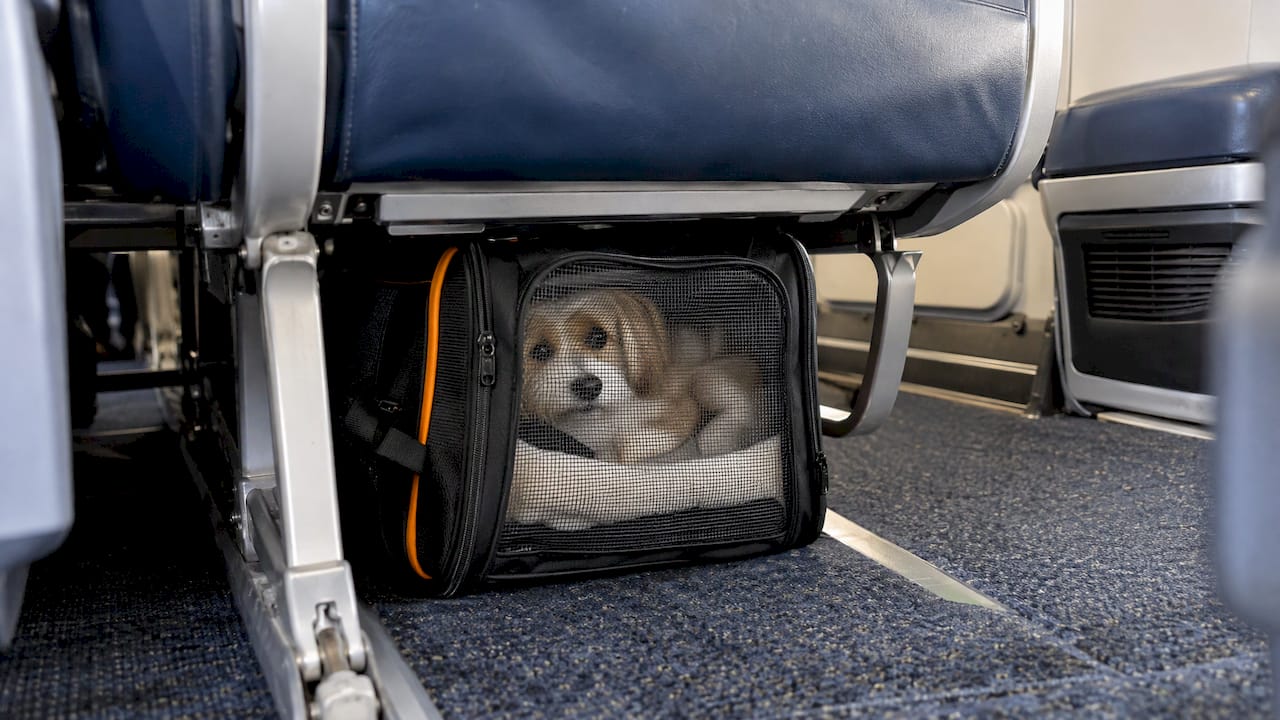
A 50-pound dog will not fit under a seat. Larger dogs go in the cargo hold, and Zoetis Petcare notes that injuries, deaths and lost animals have been reported in cargo. Flat-faced breeds such as pugs and French bulldogs should never fly in cargo because of their higher risk of breathing problems and heatstroke. If you have a large or flat-faced dog, driving or a private ground ride is the practical route.
Private ground transport for the hard cases
A private ride makes sense when you cannot drive the whole way, when your dog is too big for a plane cabin, or when your pet gets so stressed in the car that a familiar, calm driver matters. This is what we do. Our rides are private, handled by one driver who specializes in large breeds, anxious pets and special-needs animals, and you get updates while your pet is in transit. We accept large breeds that other services often turn away.
Eight weeks to two weeks before the move: the vet visit
Start with your veterinarian. The American Humane Society suggests a pre-move visit two to three weeks ahead for pets prone to car sickness or travel anxiety. Use that visit to cover these points:
- Health check and medications. Ask for refills that will last through the move, plus a copy of every record, paper and electronic.
- Motion sickness and anxiety. Ask what is safe for your pet. Never give a sedative or human medication without your vet’s guidance.
- Health certificate. Ask whether your clinic can issue a CVI. The MSD Veterinary Manual says the certificate should be issued within 10 days of travel, and recommends carrying proof of rabies vaccination too.
- A vet near your destination. Find one before you arrive, so you are not searching during an emergency.
The CVI is the document most owners forget until the last week. Since the exam must be recent, schedule it for the final days before departure and put the earlier checkup first.
Paperwork across state lines
There is no single federal rule for pets moving between states. USDA APHIS says it does not regulate owners moving pets state to state. The destination state or territory sets the requirements, which may include a health certificate, updated vaccinations, tests or treatments. APHIS advises contacting your veterinarian as soon as your travel details are known.
So your checklist is:
- Look up the rules of every state you will enter or live in, starting with the destination.
- Confirm rabies vaccination status. A current rabies record is the most universal requirement for dogs.
- Ask your vet to issue the CVI as close to departure as the destination allows.
- Keep paper copies in the car and scans on your phone.
Rules also change. The California Department of Food and Agriculture reported in November 2025 that several states are moving to accept only electronic CVIs, and that since January 1, 2026, California requires electronic CVI submission for dogs brought in for resale or change of ownership. Hawaii is a special case: it is the only rabies-free state, and the FDA notes its entry requirements for pets are strict. If you are moving there, start with the state’s own rules months ahead.
Identification and carrier training
Identification is cheap insurance on a move, when a frightened pet can slip out of a car at a rest stop. The MSD Veterinary Manual recommends ID on the collar or carrier at minimum and ideally a microchip. Before you leave:
- Put your current cell number on the collar tag.
- Check that the microchip registry has your current phone, email and, once you have it, your new address.
- Save recent photos of your pet, and of you with your pet.
For carrier training, American Humane says cats, small dogs and small animals belong in secure, well-ventilated carriers. Larger dogs should be harnessed or leashed, and no pet should ride in an open truck bed, a trunk or a moving-van storage compartment. Leave the carrier out in a familiar room for several weeks with the door open, bedding and treats inside. Then add short drives that grow longer. The CDC gives the same advice for dogs: short drives that gradually increase before a long road trip.
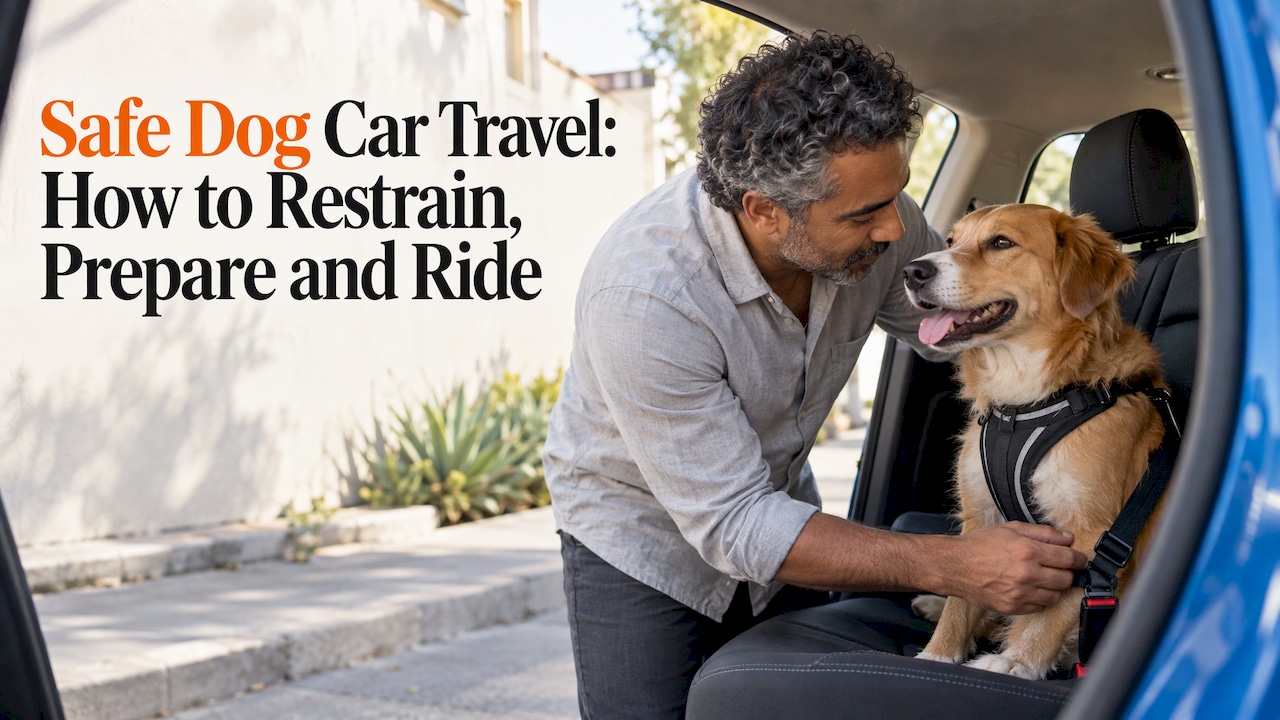
If your dog already pants, drools or cries in the car, read our guide to dog car anxiety before you plan a multi-day drive. Our page on safe dog car travel covers restraint and preparation in more detail.
On the road: what to pack and how to drive
The CDC’s pet travel guidance gives a clear list. Bring water, food and bowls, a leash, waste bags, grooming supplies, medication, a first-aid kit and your travel documents, including proof of rabies vaccination. On the road:
- Feed 3 to 4 hours before leaving. This helps prevent car sickness.
- Restrain every pet. A pet outside a crate rides in the back seat in a harness clipped to the seat buckle. A crate must be secured so it cannot slide.
- Stop often. Allow bathroom breaks and stretching time.
- Never leave a pet alone in a parked car. The CDC warns temperatures can reach lethal levels within minutes in heat, and cold can be dangerous too.
A workable pace is 6 to 8 driving hours a day with two or three breaks, which is the figure cross-country moving guides commonly give. A 2,500-mile move at that pace is a four- to five-day trip, so plan your nights before you leave.
Overnight stops and hotels
Book every night in advance. Pet policies vary a great deal by chain and even by property, and the Merck Veterinary Manual advises checking which fees and restrictions apply before booking. When you reserve, confirm:
- The pet fee, and whether it is per night or per stay, per pet or flat.
- The weight limit and the cap on pets per room.
- Whether pets may be left alone in the room. Many hotels say no.
Cornell’s College of Veterinary Medicine suggests not leaving a dog alone in a new room until it has settled, usually at least the first 24 hours. Dogs with separation anxiety may not be able to be left at all. Bring a crate so your pet has a secure space, and hang a do-not-disturb sign so housekeeping does not let your pet out.
Also write down the address of an emergency vet near each stop as you book it. If something goes wrong at 10 p.m. in a strange town, you will not want to be searching.
Large dogs, several pets and special cases
A large dog changes the plan in three ways. It will not fly in the cabin. It needs a crate or harness system that fits your vehicle. And many hotels have weight limits. With several pets, work out how many crates your vehicle can hold before you commit to driving, and confirm each hotel’s cap on pets per room.
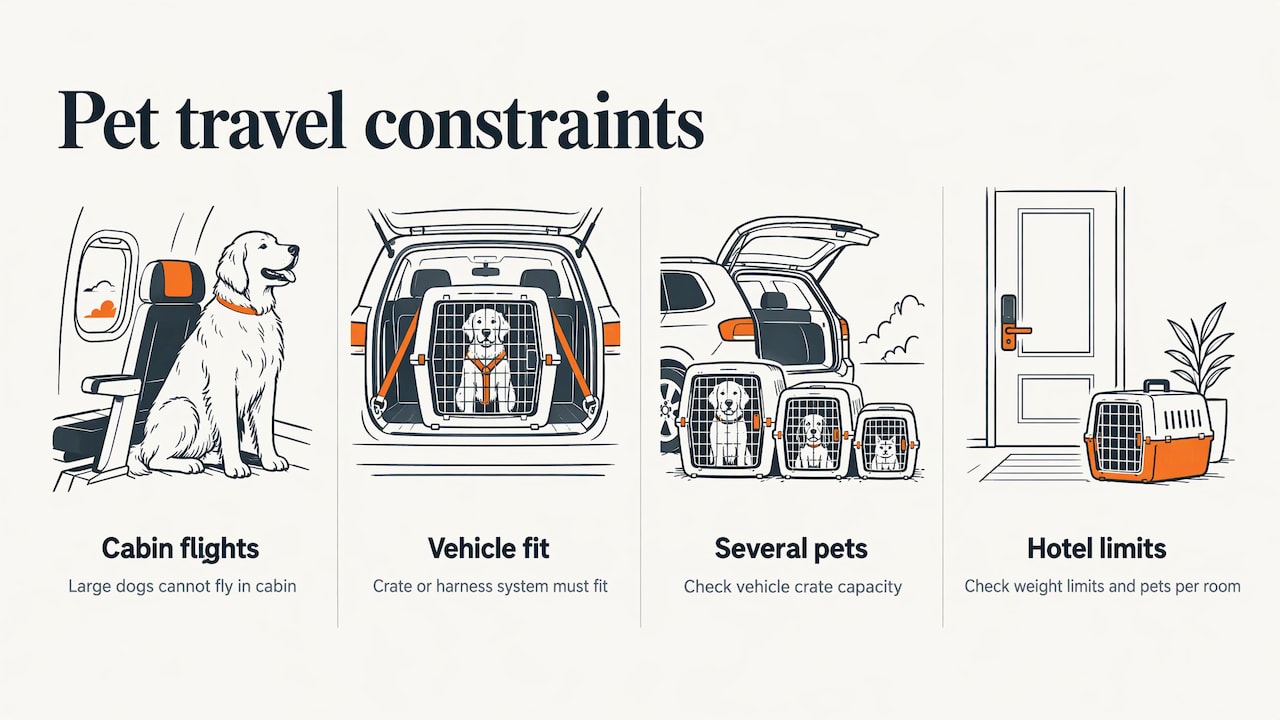
This is where a private ride earns its place. Large breeds are routinely turned down by other services. We accept them, with a listed large breed (50+ lbs) fee of $25 per ride. Our large dog transport guide explains what a private ride looks like for a big dog. For cats, see our page on pet transport for cats.
Where a private ride fits into a cross-country move
A move is rarely one clean trip. In Los Angeles it often includes several separate pet jobs:
- The pre-move vet visit and the CVI appointment. A local pet ride takes the pet there and back while you pack.
- Airport days. If you are flying and your pet is not, or the reverse, an airport pet transfer to LAX keeps one leg calm.
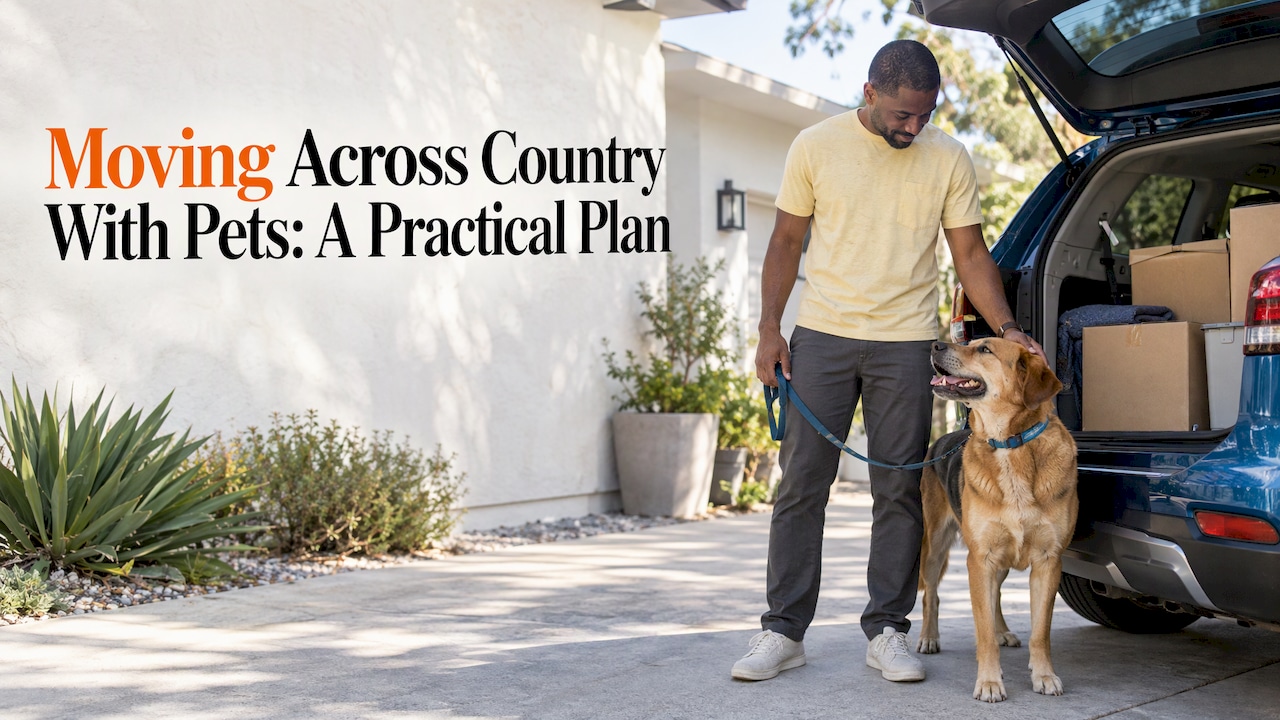
- Moving day. Doors are open, movers are carrying boxes and a nervous pet can bolt. A private ride or a drop-in visit gets them out of the chaos. Our page on pet transport and moving companies covers how this fits together.
- The drive north. Our long-distance rides within California are listed at $375 to Santa Barbara, $450 to Palm Springs, $500 to San Diego, $1,050 to San Francisco and $1,200 to Sacramento. See the Los Angeles to San Francisco page for that route.
- After-hours emergencies. If your pet gets sick the night before departure, we are available after hours.
Perspective
We hear the same worry from owners before a big move: “Will my dog cope?” The honest answer is that a stressed pet is usually a pet surrounded by strangers, noise and change. That is why we keep every ride private and why the same driver handles your pet from pickup to drop-off.
Moving is the one time when your own attention is split between a hundred tasks. A calm, experienced driver who understands large breeds, anxious dogs and special-needs animals takes one of those tasks off your list. You get updates during the ride, so you are not left guessing.
If your pet is staying in the home for a few days after the movers leave, in-home drop-in sitting keeps them in familiar surroundings, with feeding, walks, medication and photo updates.
Brian
Our rides and visits, with prices
Here is what our published prices look like for a Los Angeles move. Local pet rides start at $100 per ride. Beyond 10 miles, additional miles are $3.50 each. Other fees that may apply: rush hour (AM/PM) $25, after hours or emergency $40, and driver wait time $65 per hour. Drop-in pet sitting is $50 to $75 per visit, with medication administration at $10. Airport transfers and emergency transport are quoted individually, and custom quotes for longer trips are based on distance, pet size, timing and add-ons.

If you are moving from Los Angeles and want one dependable driver for your pet’s part of the trip, see our services page or start with a quote on petsgotaxi.com.
A sample timeline
| When | What to do |
|---|---|
| 6 to 8 weeks out | Start carrier or crate training. Check destination state rules. Book hotels and, if needed, a private ride. |
| 3 to 4 weeks out | Update the microchip registry and ID tags. Begin short practice drives. |
| 2 to 3 weeks out | Vet visit: health check, records, medications, motion sickness plan. |
| Within 10 days of travel | Get the CVI issued, and the rabies record in hand. |
| 1 to 2 days out | Pack the pet kit. Charge phones. Save emergency vet addresses along the route. |
| Travel day | Feed 3 to 4 hours before leaving. Secure crates and harnesses. Plan stops. |
| Arrival | Set up a quiet room first, keep the routine, find your new vet. |
FAQ
Can my 50-pound dog fly in the cabin?
Generally no. Cabin travel is limited to pets small enough to fit in a carrier under the seat. Larger dogs would go in the cargo hold, which carries risks, so many owners choose to drive or hire a private ground ride instead.
Do I need a health certificate to move my pet to another state?
USDA APHIS says the destination state sets the rules, so check that state’s requirements first. Many require a CVI, usually issued within 10 to 30 days of travel, and a current rabies vaccination for dogs. Ask your veterinarian as soon as your dates are set.
How long should I drive each day with a pet?
Six to eight hours is a common limit, with a stop every couple of hours for water and a bathroom break. Shorter days suit puppies, seniors and anxious pets. Plan each overnight stop before you leave.
What if I can’t drive my pet myself?
A private ground ride can cover part or all of the trip. We handle local rides, airport transfers and long-distance rides within California, and quotes are based on distance, pet size and timing.
Sources
- AVMA: Transportation of animals
- AVMA: With Your Pet brochure (2023)
- Zoetis Petcare: How to Move Across the Country with Pets
- Cross Country Moving: Moving Long Distance With Pets
- American Humane Society: How to Move with Your Pet
- MSD Veterinary Manual: Planning for Travel With Pets
- USDA APHIS: Take a Pet from One U.S. State or Territory to Another
- CDFA: AHB Newsletter November 2025
- FDA: Travel Training for You and Your Pets
- CDC: Pet Travel Safety
- Merck Veterinary Manual: Planning for Travel With Pets
- Cornell Riney Canine Health Center: Traveling safely with your dog