

No, there is no national 911 for pets. In most places, 911 is built for people, and a dispatcher will usually send you back to a veterinarian. In California, the law says so directly. If your dog or cat is hurt or seriously ill, call your vet first. If you can’t reach them, call the nearest emergency animal hospital. If your pet may have swallowed something toxic, call an animal poison-control center. Then get your pet there safely, which is the part most guides skip.
This guide covers who to call, which signs mean you should go now, what to tell the clinic, how to move a hurt animal, and what to do if you can’t drive.
TL;DR
- There is no nationwide 911 for pets. California law says 911 responders are not required to provide emergency services for dogs or cats.
- For a pet medical emergency, call your veterinarian, then an emergency animal hospital. For suspected poisoning, call an animal poison-control center.
- Call 911 for people in danger: a vicious or rabid-seeming animal, an animal causing immediate danger, or a crime such as dog fighting in progress.
- Call ahead, stay safe, and restrain your pet and keep movement to a minimum while you transport.
- If you can’t drive or lift your pet, we offer private, after-hours pet transport across Los Angeles and Southern California.
Table of Contents
- Can you call 911 for a dog, cat or other pet?
- Who to call instead
- Signs that mean go now
- What to tell the clinic before you arrive
- Moving an injured pet safely
- When you can’t drive or lift your pet
- Book a ride before the emergency
- What a ride costs in Los Angeles
- Our perspective
- Build your pet emergency plan now
- FAQ
- Sources
Can you call 911 for a dog, cat or other pet?
You can call 911 in a true public-safety situation, but not to get a medical ambulance for your pet. The rules differ by place, and California is clear about it.
California’s emergency-responder statute states that it does not require or authorize emergency services for dogs or cats in response to a 911 call. The same law says responders have no duty to transport or care for an injured pet. They may voluntarily give specified basic first aid when they are already responding to an emergency. So a fire crew may help in a fire, but you shouldn’t count on an ambulance showing up for your sick dog.
Other cities draw the line in a similar place:
- New York City: 311 says to call 911 if an animal is causing immediate danger, is vicious, or shows signs of rabies. For a sick or injured owned pet, it tells people to find an animal hospital or veterinarian.
- Minneapolis: the city directs residents to call 911 for a life-threatening animal emergency or illegal activity in progress, such as dog fighting. Other animal-control issues go through 311.
The pattern is consistent. Use 911 when people are at risk or a crime is happening. Use a vet or emergency animal hospital when your pet is the patient.
Who to call instead
You have three real options, in this order.
1. Your own veterinarian
For a pet-only medical emergency, the FDA says your regular veterinarian is the best first resource because they know your pet’s medical history and can give fitting advice. Many clinics route after-hours calls to an answering service or a partner emergency hospital, so call even at night.
2. A local emergency animal hospital
If you can’t reach your vet, the FDA advises contacting a local emergency animal hospital. Know which one is closest before you need it. The ASPCA recommends that you set up an emergency plan with your vet and keep the emergency clinic’s name, address and phone number easy to find. An emergency clinic is often not your regular practice, so it helps to have the details saved in your phone.
3. An animal poison-control center
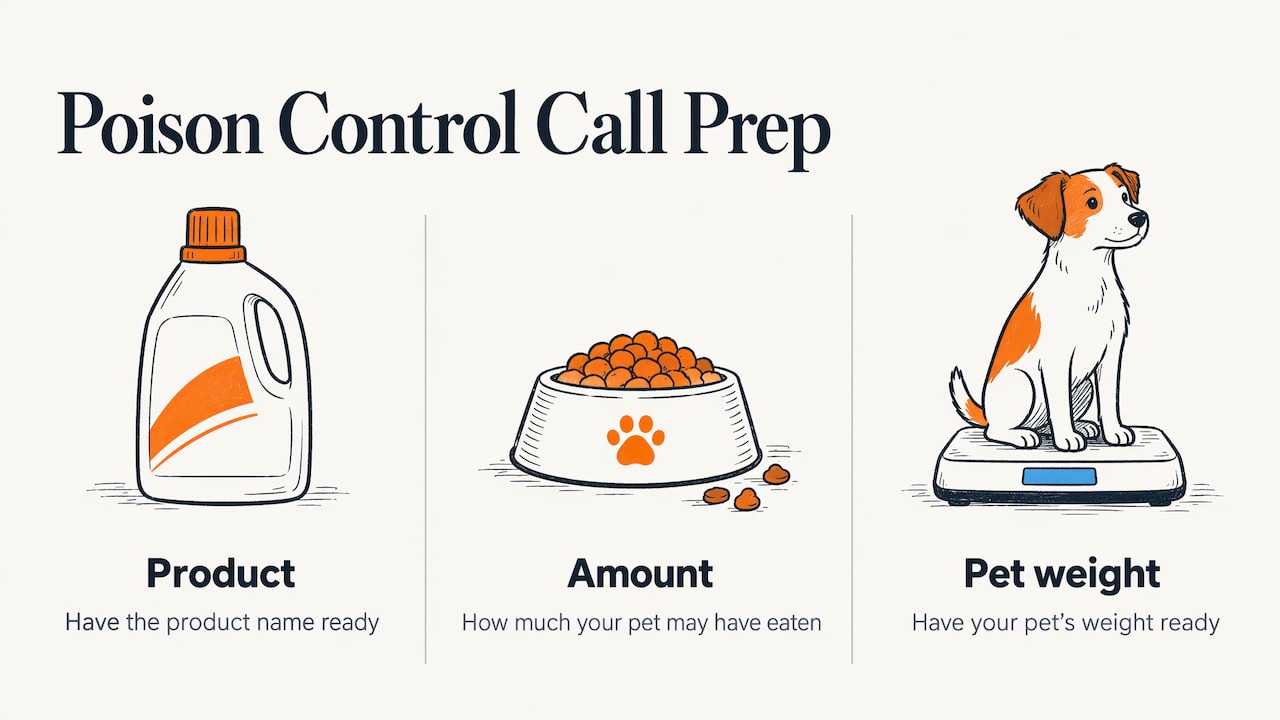
The FDA lists two U.S. centers that answer 24 hours a day, 365 days a year: ASPCA Animal Poison Control at 1-888-426-4435 and Pet Poison Helpline at 1-855-764-7661. The FDA notes that both charge a fee. Have the product name, the amount your pet may have eaten and your pet’s weight ready when you call.
One caution: don’t try to make your pet vomit because someone on the phone or a website said so. Veterinary guidance says not to give hydrogen peroxide or other substances to induce vomiting based on phone instructions. Let the veterinary team decide.
Signs that mean go now
When you are unsure whether it is an emergency, call the clinic and describe what you see. These signs are widely listed by veterinary sources as reasons to seek emergency care.
The University of Wisconsin’s veterinary school lists these as potentially life-threatening:
- Trouble breathing
- Seizures
- Poisoning
- Collapse
- Trauma
- Inability to urinate
- Nonproductive retching
- Repeated vomiting
- Eye injuries
- Difficult labor
The ASPCA adds pale gums, rapid breathing, a weak or rapid pulse, abnormal body temperature, difficulty standing, apparent paralysis and loss of consciousness. VCA’s emergency-clinic guidance also names profuse bleeding, choking, extreme pain and disorientation among the reasons to call.
These lists apply to dogs and cats. For exotic pets such as birds, reptiles or rabbits, call a veterinarian who treats that species, since not every emergency hospital does. Ask before you load the car.
What to tell the clinic before you arrive
Calling ahead lets the team prepare. The University of Wisconsin advises calling ahead while you travel if possible and bringing toxin packaging and current medications when they are easy to grab.
The MSD Veterinary Manual suggests telling the veterinarian the following, and checking some of it only if it is safe to do so:
- Whether your pet is conscious and responsive
- Its breathing pattern
- The injury, or the suspected toxin
- Gum color and heart rate, if you can check safely
The AKC adds veterinary records, vaccination history, medication information, and a leash or a fitted collar or harness for dogs. If you can, keep a folder or phone note with those details so you aren’t hunting for them under stress.
Moving an injured pet safely
Your own safety comes first. The MSD Veterinary Manual says owner safety is the first concern in first aid and transport. Even gentle pets can bite or scratch when they are in pain. The same source notes that a light cloth can calm a fearful animal. It adds that a dog should be muzzled only when there is no facial injury or breathing distress.
Dogs
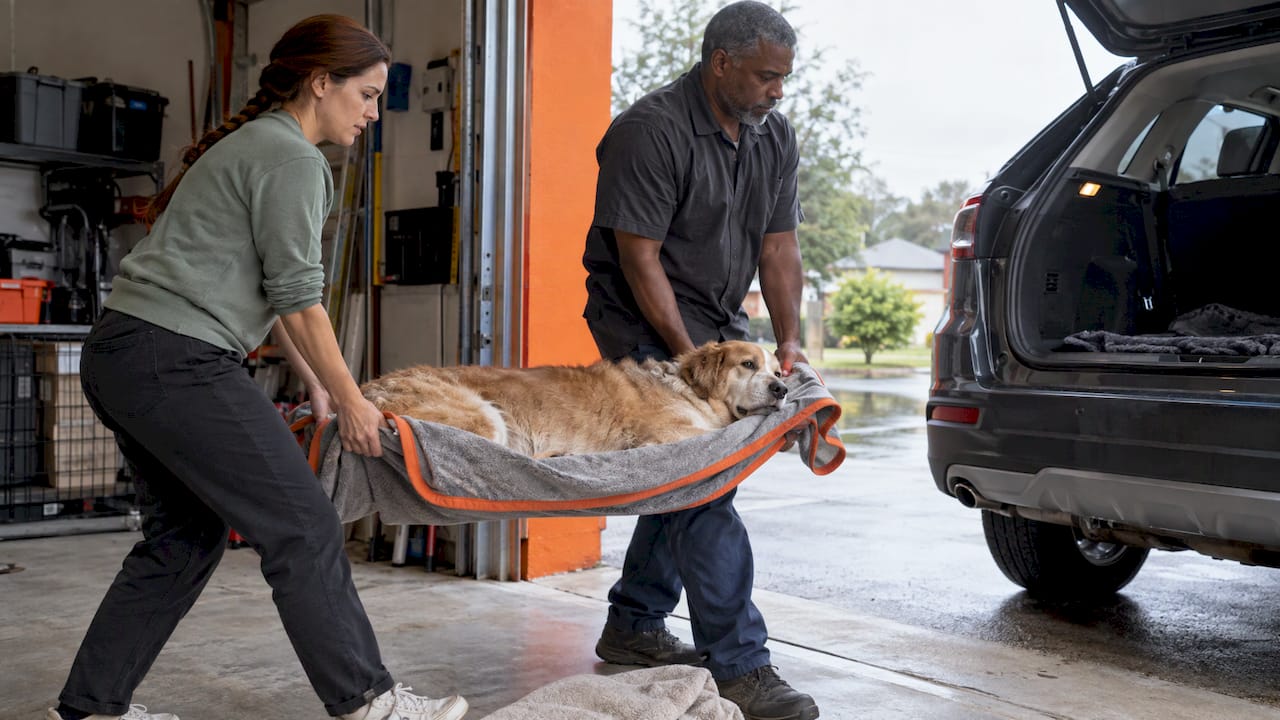
The ASPCA advises approaching an injured dog slowly and calmly. For a dog that is passive and can’t walk, it suggests a makeshift stretcher. If a spinal injury is possible, support the neck and back. Large dogs are hard to lift alone, so get a second person if you can.
In the car, the AKC recommends a crate or carrier where possible. If that isn’t possible, it recommends a dog seatbelt or car harness in the back seat.
Cats
The ASPCA advises placing a blanket or towel over an injured cat’s head to reduce biting risk. Then move the cat into an open-topped carrier or box, supporting the head and avoiding twisting the neck.
In the car
VCA advises planning the route to the emergency clinic and using a carrier, because a frightened animal loose in the car can endanger everyone. Pet CPR is the one exception to keeping your eyes on the road. The American Heart Association says that if a dog or cat becomes unresponsive, begin CPR and have someone call the nearest veterinary hospital rather than 911. It also says CPR can be done during transport only when another person is driving and the person giving compressions is safely belted. Never do it while you drive.
When you can’t drive or lift your pet
This is where a pet emergency gets stuck. You may not have a car, you may be alone with a 90-pound dog who can’t stand, or you may be too shaken to drive. A pet-focused ride can solve that, because the driver’s job is to get your animal to care calmly and safely.
This is what we do at Pets Go Taxi. We are a private pet transportation service for Los Angeles and Southern California, and we take dogs, cats and exotic animals. Rides are private, never shared, and handled by the same experienced driver, who specializes in large breeds, anxious or special-needs pets and after-hours emergencies. We send updates during the ride so you know where your pet is.
If your pet’s condition is life-threatening and you can’t safely wait for a ride, call the emergency hospital for guidance first. A ride is for getting a pet to care, and it doesn’t replace the veterinary team’s advice.
Book a ride before the emergency
Our Emergency Pet Transport and Airport Pet Transfers are set up for the moments when you can’t move your pet yourself. We also offer after-hours availability and accept large breeds that other services often turn away. We don’t publish a flat price for emergency transport, so we quote it by distance, pet size, timing and add-ons.
If you are planning ahead, our local pet rides and long-distance routes are the easiest way to see how pricing works. Save our contact details next to your vet’s and your nearest emergency hospital’s, so all three are in one place when you need them.
For routine trips such as vet visits, grooming or daycare drop-offs, the same driver and the same calm approach apply. That familiarity helps anxious pets too.
What a ride costs in Los Angeles
We publish our rates so you can plan. These are the prices on our site as of November 2026. Final quotes depend on distance, pet size, timing and add-ons.
| Service | Price |
|---|---|
| Local pet rides | from $100 per ride |
| LA to Santa Barbara | $375 per ride |
| LA to Palm Springs | $450 per ride |
| LA to San Diego | $500 per ride |
| LA to San Francisco | $1050 per ride |
| LA to Sacramento | $1200 per ride |
Add-ons that can apply to a ride:
| Add-on | Price |
|---|---|
| Additional miles beyond 10 | $3.50 per mile |
| After hours / emergency | $40 |
| Large breed (50+ lbs) | $25 |
| Rush hour (AM/PM) | $25 |
| Driver wait time | $65 per hour |
A local late-night ride for a 70-pound dog, for example, would start at $100, plus the $40 after-hours fee and the $25 large-breed fee. That makes $165 before any extra miles or wait time. Emergency veterinary bills are a separate cost, and it helps to know what your clinic charges before you go.
If you also need someone at home while you are at the clinic, we offer drop-in pet sitting at $50-75 per visit. It covers feeding, walks, litter box cleaning, medication administration ($10 extra) and photo updates. That can matter when one pet is in the hospital and another is waiting at home.
Our perspective
Most owners find out there is no 911 for pets at the worst moment. The call is easy enough. Everything after it is hard: the pet is heavy, scared or in pain, and you are shaking.
We built our service around that gap. The same experienced driver handles every ride, so your pet is never handed to a stranger or put in a shared vehicle. We take large breeds without fuss, and we keep after-hours availability because emergencies don’t keep office hours.
Our advice is to settle three things this week: your vet’s after-hours instructions, the nearest emergency hospital, and who will drive your pet if you can’t. A calm ride starts with a plan made before anything goes wrong.
Brian
Build your pet emergency plan now
A short checklist saves minutes when they count:
- Save your vet’s number, the nearest emergency animal hospital’s address and phone, and the two poison-control numbers in your phone.
- Keep a folder with vaccination records, medication lists and notes on health conditions. The AKC lists these records among the things to bring.
- Keep a carrier or a dog harness where you can reach it. Make sure a large dog can be loaded by two people.
- Know whether your emergency clinic treats your type of pet, especially if it is a bird, reptile or small mammal.
- Choose a backup driver, whether a friend or a pet transport service, and save their number.
We recommend practicing the carrier or car-harness routine on a calm day. A pet that already knows the carrier is easier to move when it is hurt.
FAQ
Can I call 911 for my dog?
You can call 911 if there is danger to people, such as a vicious animal or a crime in progress. For your dog’s medical emergency, 911 is not the right line. In California, the law does not require or authorize emergency services for dogs or cats in response to a 911 call. Call your vet or an emergency animal hospital instead.
Is there a 24-hour hotline for pet emergencies?
There is no national pet 911, but there are two 24/7 animal poison-control centers: ASPCA Animal Poison Control at 1-888-426-4435 and Pet Poison Helpline at 1-855-764-7661. Both charge a fee, according to the FDA. For injuries and illness, call your vet or the nearest emergency animal hospital, many of which answer around the clock.
Will 911 help with an injured stray or wildlife?
It depends on your area. Many cities send stray, wildlife and animal-control reports through 311 or a local animal services line, and keep 911 for immediate danger. If an animal is blocking a road or threatening people, call 911. Otherwise, check your city or county animal services website.
What should I do if my pet stops responding?
The American Heart Association says to begin CPR and have someone call the nearest veterinary hospital rather than 911. If you are alone, ask the clinic for guidance as soon as you can. Get to a veterinary hospital right away.
What if I can’t drive my pet to the emergency vet?
Call the emergency hospital first and tell them what is happening. If you have no car or can’t lift your pet, a private pet transport service can take your pet to the clinic. We offer after-hours emergency pet transport in Los Angeles and Southern California, with updates sent to you during the ride.
Sources
- California Code, HSC 1799.109
- Injured or Sick Animal, NYC311
- Animal Issue, City of Minneapolis
- Who Do You Call if You Have a Pet Emergency? FDA
- Emergency Care for Your Pet, ASPCA
- When to Seek Emergency Care for your Pet, University of Wisconsin
- How Do Emergency Clinics Work? VCA Animal Hospitals
- First Aid and Transport of Small Animals, MSD Veterinary Manual
- How to Transport a Dog to the Hospital, AKC
- How dogs and cats can get lifesaving CPR from their owners, American Heart Association
- How Do Emergency Clinics Work? VCA Animal Hospitals (transport guidance)