

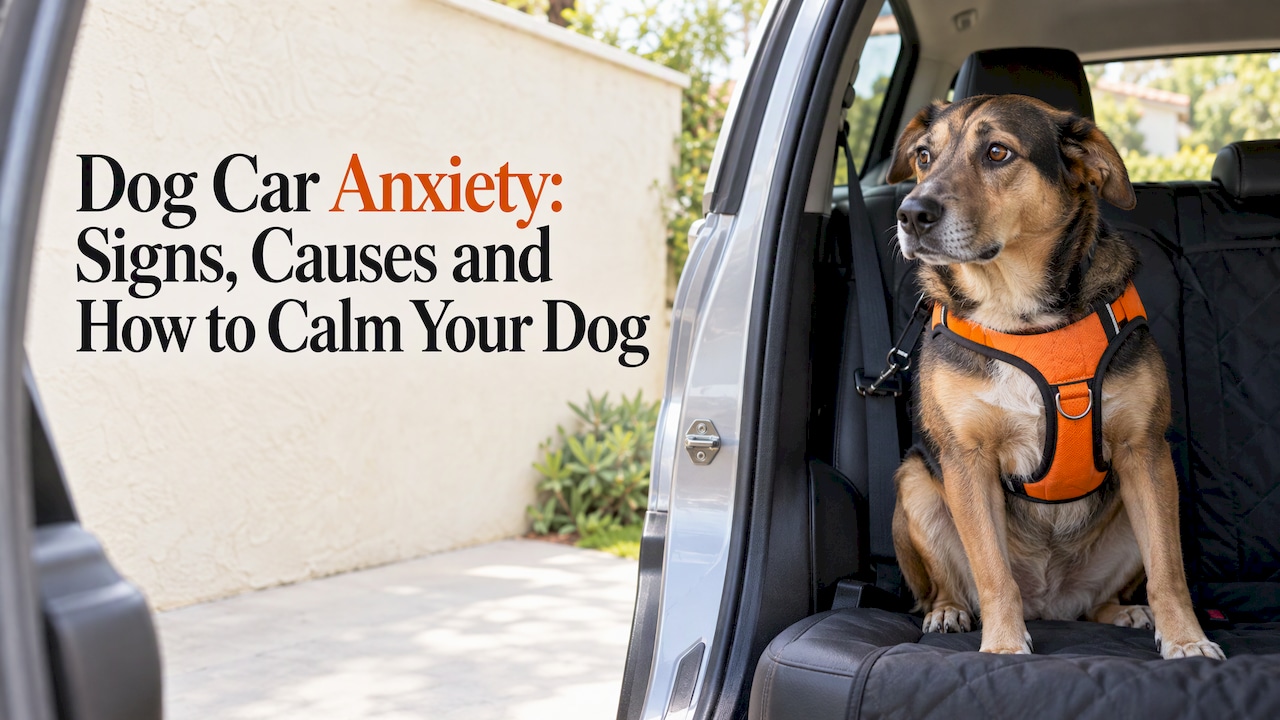
Most dogs with car anxiety can get better, and the fix is usually a mix of three things. First, a vet visit to rule out nausea or pain. Second, slow retraining that teaches your dog the car predicts good things. Third, a secure, comfortable setup for every ride. Below you will find the signs to look for, a step-by-step plan, and what to do on the days you can’t wait for training to work.
TL;DR
- Drooling, pacing, whining, yawning, lip licking and refusing to get in are common signs of a dog that is anxious in the car.
- Ask your vet first. Motion sickness and pain can look like anxiety, and there are treatments for both.
- Retrain gradually with treats and play: car parked, then engine on, then a few feet, then short trips. Go back a step whenever your dog shows stress.
- Always restrain your dog with a crash-tested harness or a secured crate, ideally in the back seat.
- If a trip can’t wait for training, a private ride with a handler who works with anxious dogs can spare your dog the stress.
Table of Contents
- How to tell if your dog is anxious in the car
- What causes car anxiety in dogs
- Start with your vet
- Motion sickness or anxiety? Often it is both
- A step-by-step plan to help a dog with car anxiety
- Set up the car for a calmer ride
- Restraint: calmer and safer
- When training can’t wait
- Pets Go Taxi: private rides for anxious dogs
- Common mistakes to avoid
- FAQ
- Sources
How to tell if your dog is anxious in the car
Car anxiety rarely starts with a dramatic meltdown. It usually begins with small signals that owners read as excitement. VCA Animal Hospitals lists salivation, restlessness, pacing, whining, howling, barking and vomiting as signs, and notes that some dogs become anxious as soon as they get in the car, even before it moves.
A useful way to read your dog is by intensity:
- Mild: yawning, lip licking or smacking, panting, drooling, a stiff or crouched posture.
- Moderate: fidgeting, licking paws, whining or other vocalizing, pacing from window to window.
- Severe: refusing to approach the car, trembling or shaking, vomiting, or urinating or defecating in the vehicle.
This mild-to-severe scale follows Rover’s description of symptoms, and the individual signs overlap with those in other veterinary sources. Watch what happens before the engine starts. A dog who hangs back at the door, or who starts panting when you pick up the keys, is telling you the problem is the car itself and not only the motion.
What causes car anxiety in dogs
There is rarely a single cause. The American Kennel Club says common reasons for car-related stress include motion sickness, anxiety, bad past experiences and frequent trips to unpleasant places such as the vet. If the only time your dog rides is to get a vaccine or a nail trim, the car becomes a predictor of bad news.
VCA adds a list of specific triggers: getting into the car, being restrained, motor sounds, vehicle movement, changes in speed, windshield wipers, and doors or windows opening and closing. That list is helpful because it shows you what to break apart in training. A dog may be fine with the parked car but upset by the engine, or fine with the engine but upset by the first turn.
It can also be a chicken-and-egg problem. A dog that feels sick on a few rides learns to dread the car, and a dread-filled dog is tense, drooly and more likely to feel sick. That is why treating both the body and the emotions tends to work better than treating one.
Start with your vet
Before you start training, book a checkup. Dr. Beth Turner of Preventive Vet advises a visit to rule out medical problems that can mimic motion sickness or travel anxiety, such as pain from a slipped disc or arthritis, an inner or middle ear infection, or high blood pressure. A dog who yelps when jumping into the back seat may not be afraid of the car at all, just hurting.
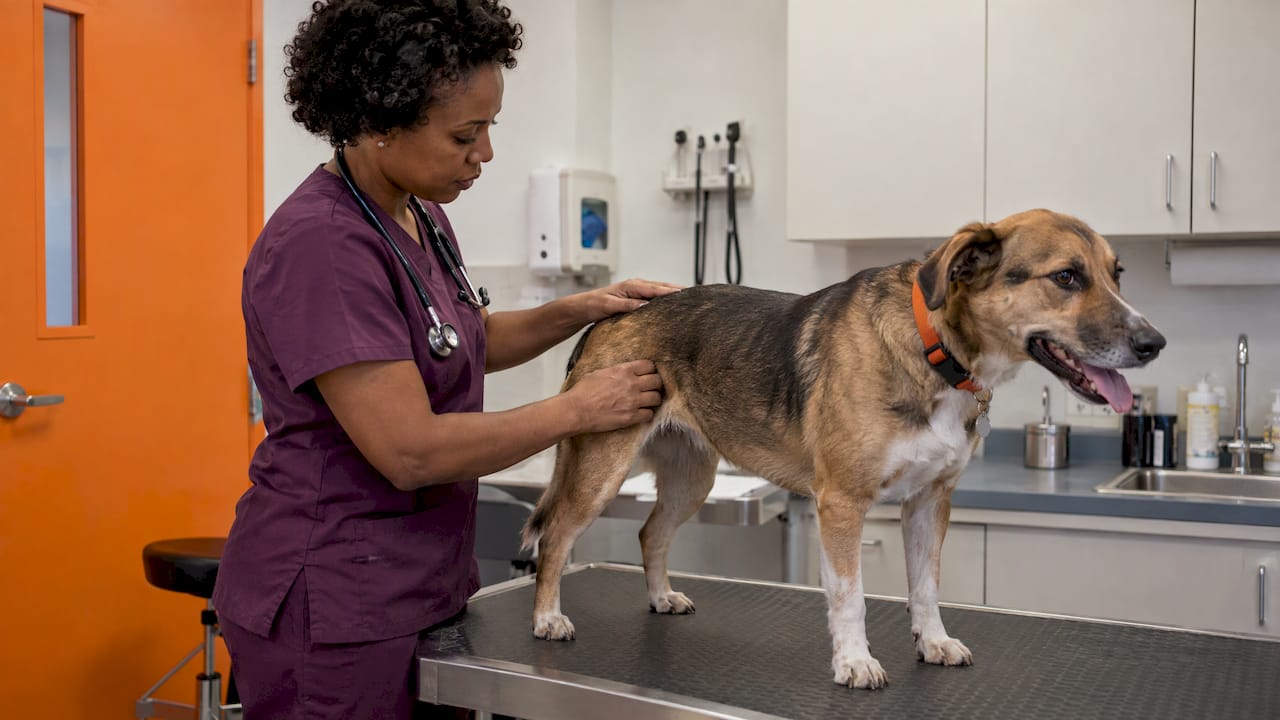
See your vet sooner if your dog drools heavily or vomits while the car is moving. VCA says that treatment can include anti-nausea medication, behavior modification and medication to relieve anxiety. Best Friends Animal Society likewise says that if stress continues, ask your veterinarian about medications for anxiety or car sickness. Your vet can tell you which, if any, fits your dog’s age, weight and health.
Motion sickness or anxiety? Often it is both
The Merck Veterinary Manual describes motion sickness in dogs as causing nausea, excessive drooling and vomiting, and sometimes yawning, whining, uneasiness or diarrhea. The signs usually disappear once the vehicle stops. Anxiety, by contrast, can begin before the car moves and can linger afterward.
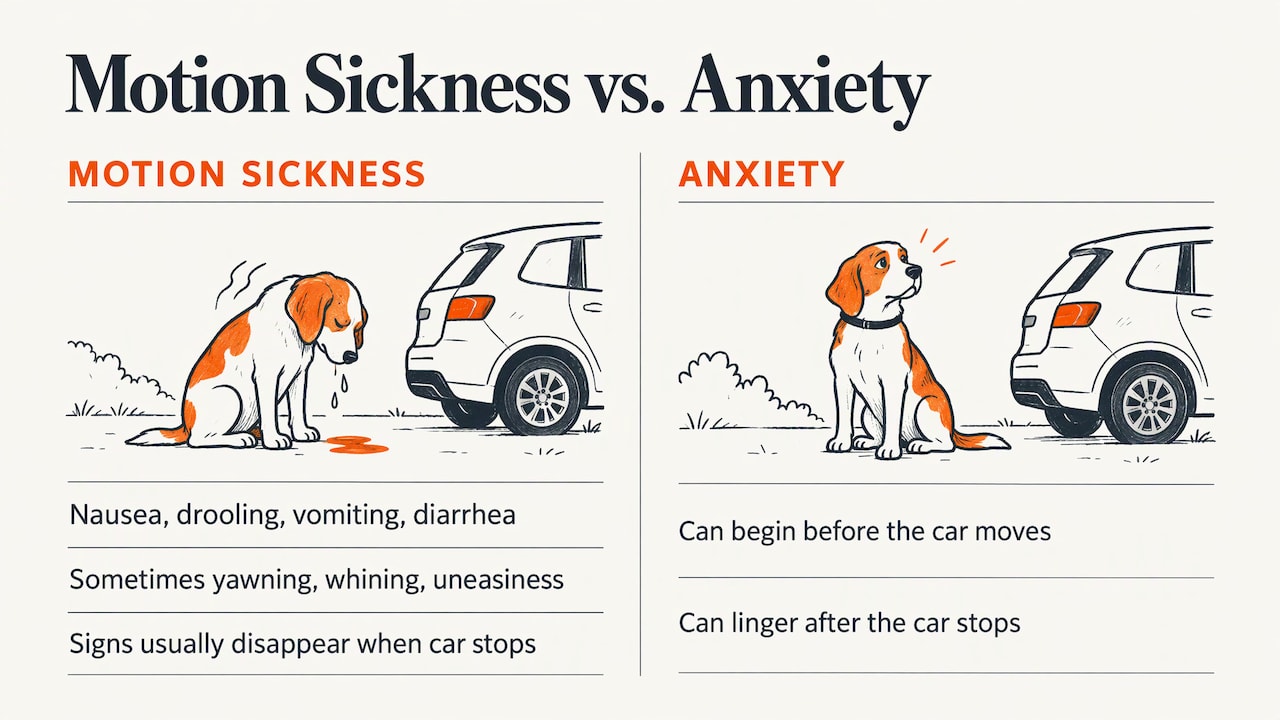
It is hard to tell them apart at home. Dr. Turner suggests treating for possible motion sickness while also helping the dog feel more comfortable, and notes that if nausea is the main issue, improvement should come fairly quickly once effective treatment starts. That quick change is a clue you can share with your vet.
A word about over-the-counter options. PetMD says Benadryl is somewhat effective for preventing motion sickness but not very effective for underlying anxiety, and recommends asking a veterinarian about Cerenia. A veterinarian at Hearthstone Animal Clinic writes that Cerenia is the only FDA-approved medication for preventing vomiting from motion sickness in dogs, and adds that some dogs get hyper on Benadryl instead of drowsy. Don’t give any medication, including human products, without your vet confirming the drug and the dose for your dog.
A step-by-step plan to help a dog with car anxiety
Training works by changing how your dog feels about the car. The Wisconsin Humane Society points out that simply driving a dog around a lot will not change their emotional response, so the plan has to go slowly and not skip steps.
The AKC describes the method as gradual desensitization and counter-conditioning: expose your dog to the car at a level they can handle and pair it with food, toys, games or training. Here is a six-step version based on the Wisconsin Humane Society’s plan:
- Approach. With the car parked and quiet, reward your dog with high-value treats for walking toward it. Use something special, like chicken, that your dog never gets otherwise.
- Get in. Reward small steps toward entering: front paws on the floor, then all four paws, then sitting.
- Settle. Let your dog sit in the car with the doors closed and the engine off. Feed treats, give a chew, play a quiet game.
- Engine on. Start the car for a moment while treats are flowing, then turn it off.
- Move a little. Roll forward a few feet, or up the driveway, then stop and reward.
- Build distance. Add time and distance gradually, ending at a place your dog loves.
How to know when to move on
The rule that matters most comes from the AKC’s Stephanie Gibeault: only advance when your dog is completely relaxed at the current stage. If your dog stops eating, won’t play or looks stressed, you probably moved too fast, so go back a step. A relaxed dog takes treats gently, has loose body language and recovers quickly from a noise.
Keep practice short and frequent
Best Friends advises practicing daily and adding a bit of drive time each day. If your dog starts to drool or look anxious, stop, take a walk, then go home, and make the next day’s drive shorter or choose a route with fewer curves and bumps. Make sure some of your trips end somewhere great, like a park or a trailhead, so the car isn’t only a vet-visit machine.
Set up the car for a calmer ride
While you train, small changes to the ride itself can lower the load on your dog. The AKC suggests keeping the car cool, lowering windows slightly for fresh air, limiting food and water for a few hours beforehand, exercising your dog about 20 minutes before leaving, and using a dog pheromone spray. VCA says a pheromone can be lightly spritzed onto a towel on the seat or in the crate to encourage relaxation.
A quick pre-ride checklist:
- A tired dog is easier to settle, so walk or play first.
- Bring a familiar blanket or a towel that smells like home.
- Pack a chew or a stuffed toy for the drive.
- Take a quiet route when you can, with gentle turns and smooth braking.
- Stop immediately if your dog starts to drool or retch, and take a calm walk before continuing.
VCA recommends the same last step: if stress appears, find a safe place to stop and take a quiet walk, then try again later at a lower level of intensity.
Restraint: calmer and safer
Security is not only a safety matter. Many nervous dogs settle better when they can’t slide or pace around. The American Veterinary Medical Association says pets should always be restrained with an appropriate harness, crate or carrier, because unrestrained animals can be crushed by deployed airbags or thrown through windows in a collision. It advises putting a crate near the center of the vehicle and securing it so it can’t shift.
The back seat is the safest spot. PetSafe notes that the back seat with proper restraint is safest, and suggests crash-tested gear certified by the Center for Pet Safety. Wirecutter adds a warning about open windows: dogs can fall or jump out, and eyes can be injured by hanging the head outside. Crack the window for fresh air, but not enough for your dog to get out.
When training can’t wait
Real life doesn’t always allow six weeks of practice. A dog may need a vet visit tomorrow, a flight next week or an emergency tonight. In those cases, it helps to have another way to get your dog there with the least stress.
Our view
In our experience, the first ten minutes decide the ride. A dog who gets handed to a stranger, or squeezed into a shared vehicle, is already in trouble before the engine starts. That is why every ride we run is private, and why the same driver handles your dog from pickup to drop-off. We specialize in large breeds, anxious and special-needs pets, and after-hours emergencies, and we send you updates during the trip so you are not left guessing.
Training your dog to love the car is a great goal, and we encourage it. But a dog who has to get to the vet, the groomer or LAX before training is done deserves a calm ride in the meantime. Our approach is to give each pet individual attention, whether that means a secure carrier for a small animal or room to stretch out for a big dog.
Brian
Pets Go Taxi: private rides for anxious dogs
If your dog gets worked up in the car, or you simply can’t be the driver, we can take your dog for you. Pets Go Taxi offers private pet transportation across Los Angeles and Southern California for vet visits, grooming and daycare drop-offs, airport transfers and after-hours emergencies. Your dog rides with the same experienced driver, with no shared rides and no handoffs to strangers, and you get updates in real time.
Local rides start at $100 per ride. A large-breed fee of $25 applies to dogs 50 pounds and over, and after-hours or emergency rides carry a $40 fee. Distance trips are priced per route, such as $375 to Santa Barbara or $500 to San Diego. See the full list of rides and fees to plan your trip, or read about our airport and emergency transport services.
If you want to know how we handle dogs at the airport, see our guide to getting your dog to LAX. Staying home is another option for some pets: our drop-in pet sitting visits run $50 to $75 each, so your dog is comfortable in familiar surroundings.
Common mistakes to avoid
- Moving too fast. Skipping from “engine on” to a 30-minute drive is the most common reason training stalls.
- Only driving to the vet. Mix in fun destinations so the car doesn’t predict bad news.
- Scolding. Fear can’t be punished away. It makes the car more upsetting.
- Feeding a full meal right before. The AKC suggests limiting food and water for a few hours first.
- Giving human medication without asking. Dosing and side effects differ in dogs, so check with your vet.
FAQ
Why is my dog suddenly anxious in the car?
A sudden change can point to a bad experience, such as a rough drive or an unpleasant trip, or to a health problem. Pain from arthritis or a spinal issue, or an ear infection, can make car rides uncomfortable. Book a vet visit to rule out medical causes before you start training.
How do I calm a dog in the car right now?
Secure your dog in a crate or harness, keep the car cool and crack a window for fresh air. A familiar blanket, a chew and a smooth, quiet drive help. If your dog begins to drool or vomit, pull over safely, take a quiet walk, and ask your vet about anti-nausea options.
Can a dog outgrow car anxiety?
Some puppies grow out of motion sickness, but anxiety that has been learned usually needs training. Gradual desensitization, with treats and play at every step, is the approach the AKC and the Wisconsin Humane Society describe. Progress depends on the dog, so stay at each step until your dog is fully relaxed.
Should I use calming products or medication?
Pheromone sprays and snug vests are common tools, and VCA mentions pheromones on a towel or in a crate. Prescription anti-nausea or anti-anxiety medication is a decision for your veterinarian, who can match it to your dog’s health and weight. Never give human medication on your own.
Can someone else drive my anxious dog to the vet?
Yes. A private pet taxi can take your dog to a vet visit, the groomer or the airport while you work on training at home. Ask about handling of nervous dogs, large breeds and whether you will get updates during the trip.
Sources
- VCA Animal Hospitals: Traveling by air and car with your dog
- American Kennel Club: Preventing motion sickness and anxiety in dogs during car rides
- Rover: How to help a dog with car anxiety
- Preventive Vet: Preventing and treating motion sickness in dogs
- Best Friends Animal Society: How to relieve dog car anxiety
- Merck Veterinary Manual: Motion sickness in dogs
- PetMD: Can I give my dog Benadryl?
- Hearthstone Animal Clinic: Summer travel with pets
- Wisconsin Humane Society: Car sickness
- American Veterinary Medical Association: Pet safety in vehicles
- Wirecutter: The ultimate guide to traveling with your pet
- PetSafe: Pet travel safety tips