
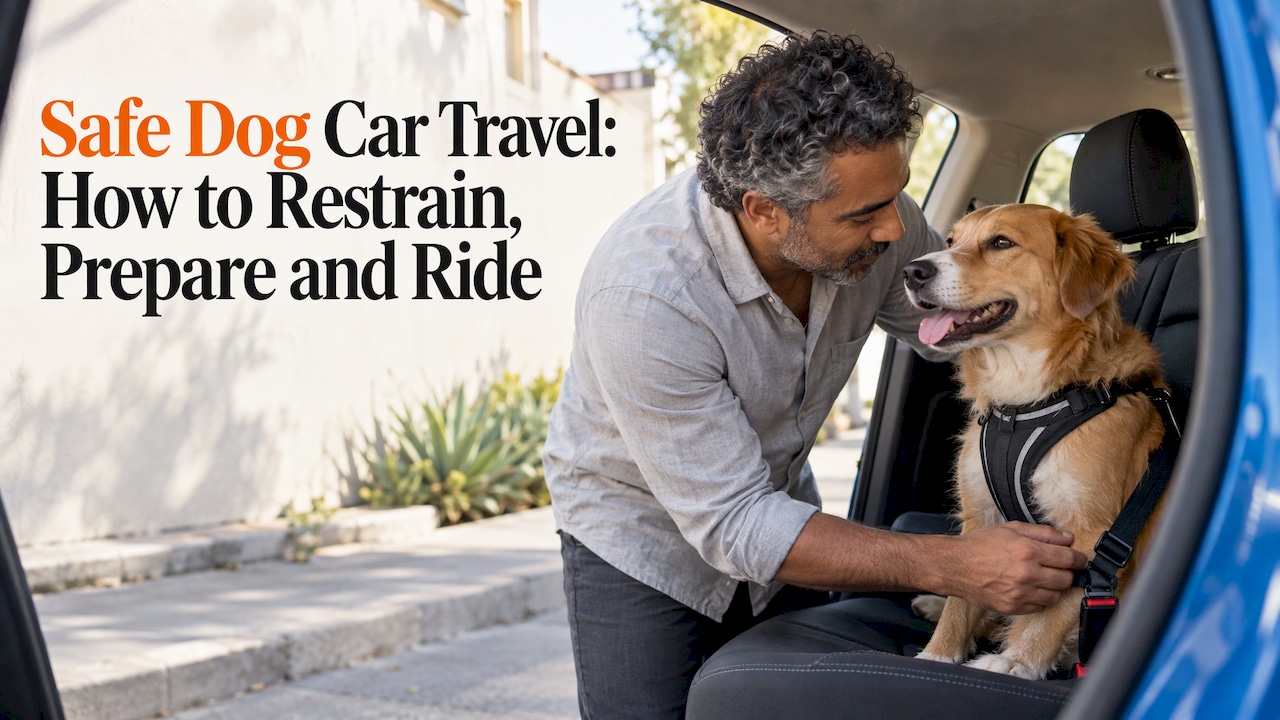
The safest way for a dog to ride in a car is in the back seat, secured with a crash-tested harness clipped to a seat belt, or in a crate or carrier that is strapped down so it cannot slide. AAA says the same: back seat, appropriate restraint, never the front seat or a lap. This guide covers the setup, the preparation, and what to do when your dog is large, anxious or headed to the vet at night, where a private ride from us in Los Angeles can take the driving off your hands.
TL;DR
- Put your dog in the back seat, restrained. Front-seat airbags are built for adult humans and can seriously injure a dog.
- Use a fitted, crash-tested harness on a seat belt, or a secured crate or carrier. Never clip a belt to a collar.
- “Crash-tested” on a label is often an unverified claim, so look for independent testing.
- Practice short rides, feed a few hours ahead, stop every 2 hours, and never leave a dog in a parked car.
- Large, anxious or emergency-bound dogs can ride in our private, one-driver pet taxi in Los Angeles and Southern California.
Table of Contents
- Where is the safest place for a dog in the car?
- Why an unrestrained dog is a risk to everyone
- Harness, crate, carrier or barrier: choosing the right restraint
- What “crash-tested” really means
- Prepare your dog and your car
- Never leave a dog in a parked car
- When a private ride is the safer plan
- Our view
- Book a safe ride for your dog
- FAQ
- Sources
Where is the safest place for a dog in the car?
The back seat. PetSafe explains that airbags are designed to protect adult humans, and their deployment force can seriously injure or kill a pet in the front seat, even a harnessed one. AAA also advises against a dog riding in anyone’s lap.
A few other rules from veterinary sources:
- Never let a dog ride loose in an open pickup bed, and never let it put its head out the window, per Cornell’s Riney Canine Health Center.
- If you have no crash-tested option, Cornell says a carrier secured on the floor behind a front seat offers the most protection in an accident.
- In an SUV, a barrier can keep a large or escape-prone dog in the cargo area, according to PetMD’s veterinarians. Pair it with a restraint when you can.
Why an unrestrained dog is a risk to everyone
In a crash or hard stop, a loose dog keeps moving. Consumer Reports cites a figure that a 60-pound dog in a car at 35 mph becomes a 2,700-pound projectile. That is a danger to the dog and to everyone in the car.
A loose dog also distracts the driver. Laws vary by state. According to a 2026 state-law review, a handful of states have explicit dog-restraint rules, and Arizona’s SB 1270 took effect Jan. 1, 2026, with fines of $75 to $149 for a first offense of driving with a pet on your lap. Even where no specific law exists, an officer can still pull you over if the dog blocks your view or distracts you. The Animal Humane Society makes that point about states without a dog-specific law. Check your own state’s rules before a road trip.
Harness, crate, carrier or barrier: choosing the right restraint
| Option | Best for | Key rule |
|---|---|---|
| Crash-tested harness plus seat belt | Most medium and large dogs | The belt clips to the back of a fitted safety harness, never a collar |
| Secured crate | Large dogs, anxious dogs, dogs with back or neck injuries | Strap it down so it cannot slide |
| Carrier | Toy and small breeds | Secure it on the seat or floor; do not run the belt through the carrier handle |
| Barrier | Large or escape-artist dogs in an SUV | Keeps the dog in the cargo area; it is not a crash restraint |
The details matter:
- Collars are dangerous. AAA warns that attaching a restraint directly to a collar can cause serious neck or throat injuries in an impact.
- Fit the harness. Dr. Elisa Mazzaferro told PetMD that two fingers should slip under the harness at the collar, back and armpits. The belt attaches to the harness with a clip, not threaded through a regular walking harness.
- Injured backs and necks. The same PetMD article notes that crates and carriers are preferred for these dogs, because a harness can put sudden pressure on the body during hard braking.
- Crate quality. Zoetis Petcare calls a crash-tested crate the gold standard, and says such crates are less likely to pop open after a crash, which reduces the chance a dog runs from the scene.
- Crate size. The ASPCA says the crate should be well ventilated and large enough for the dog to stand, sit, lie down and turn around.
What “crash-tested” really means
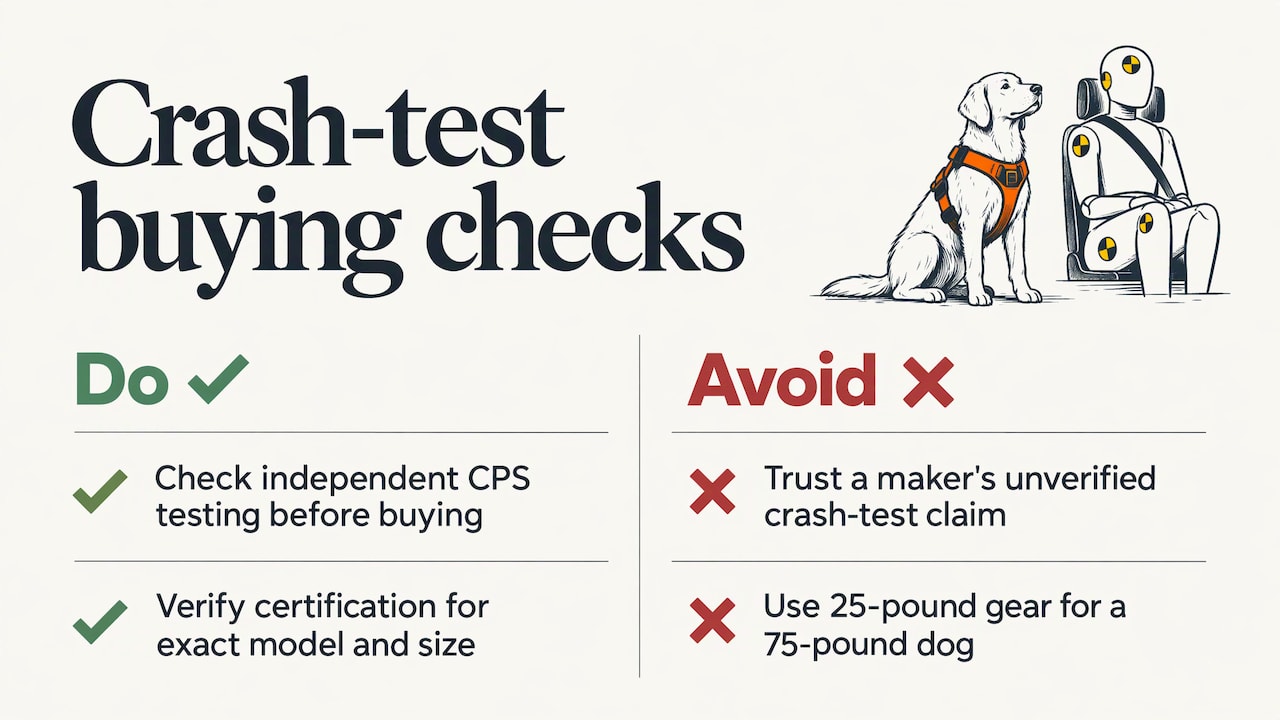
There is no federal standard for pet restraints the way there is for child seats. Consumer Reports says the Center for Pet Safety, with support from Subaru, ran independent tests using crash-test dummy dogs of 25, 45 and 75 pounds, based on FMVSS 213, the standard used to certify child car seats. It advises checking for that independent testing, because a manufacturer’s own “crash-tested” label is usually an unverified claim.
The practical step is to check whether the specific harness or crate model, in your dog’s size, was certified by the Center for Pet Safety before you buy. Weight matters: a harness rated for a 25-pound dog is not a safe choice for a 75-pound one.
Prepare your dog and your car
A restraint only works if your dog accepts it. Build up gradually.
- Introduce the crate or harness at home. Cornell suggests short sessions of 5 to 10 minutes with positive reinforcement.
- Start with very short rides. The ASPCA and the Merck Veterinary Manual both advise practice drives before a long trip.
- Time meals. The ASPCA recommends feeding three or four hours before departure, not in a moving car. Quartz notes a full stomach makes motion sickness more likely, and that letting the dog see out a window can reduce the sensory conflict behind it.
- Burn energy first. Cornell recommends physical activity before the trip.
- Plan stops. Merck advises stopping at a safe area about every 2 hours for water and bathroom breaks, with your dog leashed at every stop.
- Carry ID. The Animal Health Foundation recommends an up-to-date ID tag and a pet first-aid kit.
If your dog pants, drools or shakes in the car, our guide on dog car anxiety walks through the signs and how to calm them.
Never leave a dog in a parked car
Heat is the quickest danger. PetSafe cites AVMA research that a parked car’s interior can rise about 20°F in 10 minutes and nearly 30°F in 20 minutes. On a 70°F day it can exceed 110°F, and cracked windows or shade do not fix it. In Southern California, treat any errand that needs a stop as a reason to bring someone else along or to skip the stop.
When a private ride is the safer plan
Some trips are hard to do safely in your own car: a 90-pound dog with no crate that fits, an anxious dog that needs your full attention, an emergency at 2 a.m., or a morning when you have to be at the airport. Driving while managing the dog is itself a distraction risk.
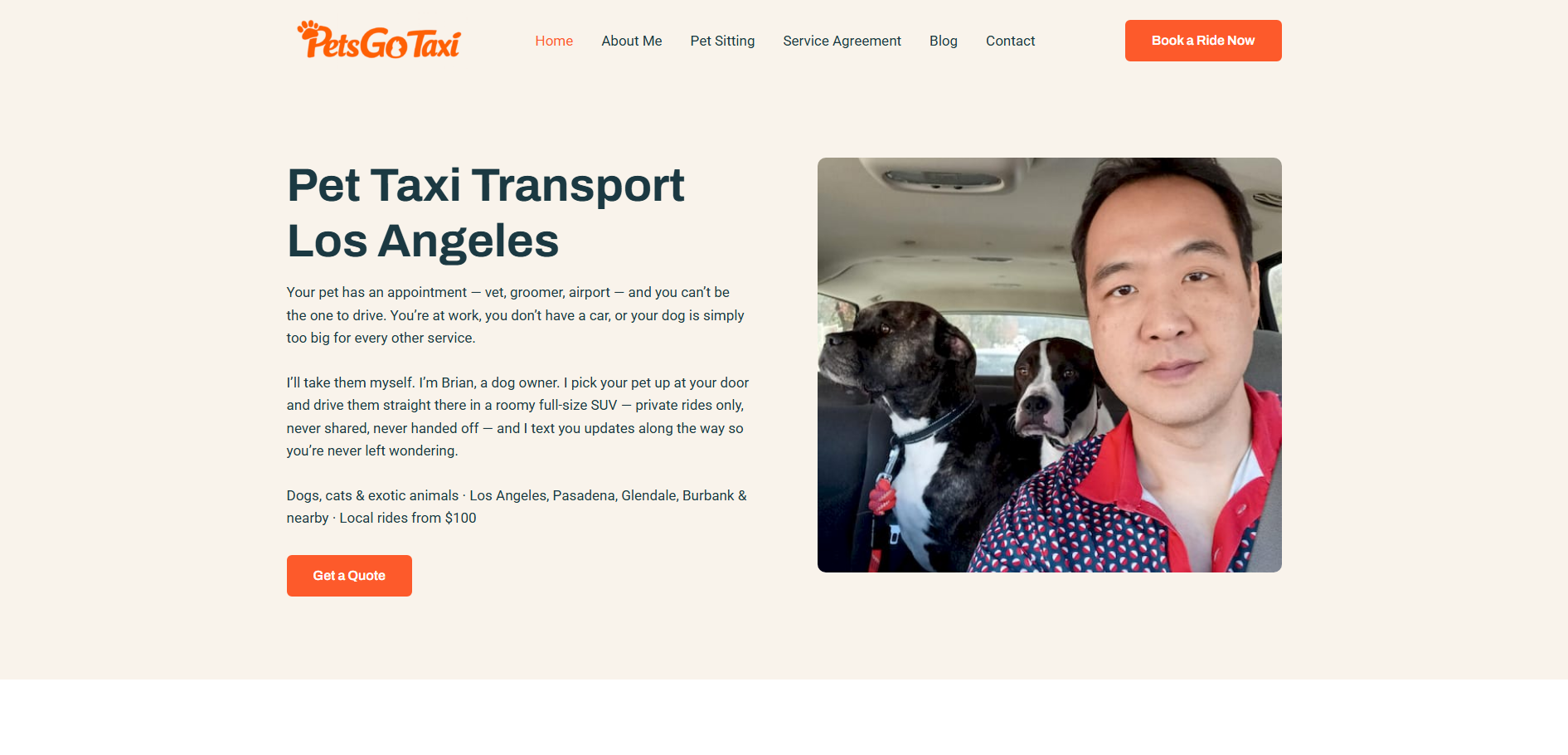
That is the gap we fill. Every ride is private, handled by the same experienced driver who specializes in large breeds, anxious or special needs pets and after-hours emergencies. Your dog is never handed to strangers or put in a shared ride, and you get updates during transit.
Our large-breed surcharge is $25 per ride for dogs 50 pounds and up, and we accept large breeds that other services often turn away.
What a ride costs
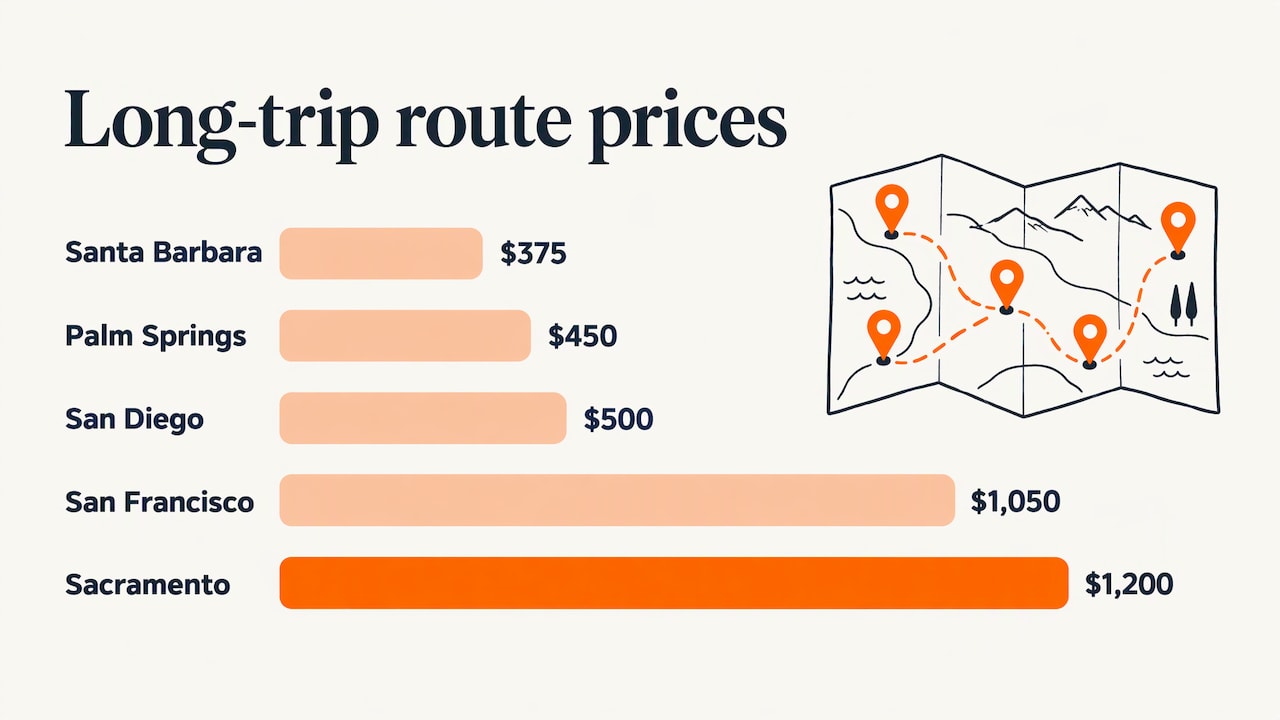
Prices are published on our site: local rides start from $100 per ride, with 3.50 per mile beyond the first 10 miles. Add-ons include $25 for rush hour, $65 per hour of driver wait time, and $40 for after-hours or emergency rides. Longer trips are priced by route: Santa Barbara is $375, Palm Springs $450, San Diego $500, San Francisco $1,050 and Sacramento $1,200. Airport transfers and emergency transport are quoted individually on our services page.
If you want to see how a booking works before you reserve, read how a pet taxi works. For an urgent trip, see our guide to emergency pet transport.
Our view
Most owners we talk to care about safety and then run into a practical wall: the dog is too big, too nervous, or the trip is at a bad hour.
We built our service around those cases. One driver, one pet, no shared rides, and a dog who is calm because the person handling them knows large and anxious animals.
Safe travel is a routine, not a gadget: a secure spot in the back, a good restraint, a calm start. When that routine is hard to achieve in your own car, we do it for you.
Brian
Book a safe ride for your dog
If your dog needs to get to the vet, the groomer or LAX without a stressful drive, we can handle it. Local rides start from $100 per ride, and we take large breeds, anxious dogs and after-hours emergencies. Start on our pet transport page to request your ride, or see airport pet transport to LAX.
FAQ
Can you get pulled over for driving with a dog in your lap?
Yes, in some cases. Arizona now fines first offenses of $75 to $149, and several states have explicit restraint laws. In states without one, distracted-driving or reckless-driving rules can still apply if the dog blocks your view or interferes with driving.
Is it safe for a dog to ride in the front seat?
No. Airbags are designed for adult humans, and their force can seriously injure a dog even when it is harnessed. The back seat, with a restraint, is the safer spot.
Can I attach a seat belt to my dog’s collar?
No. AAA warns that impact force through a collar can cause serious neck or throat injuries. Clip the belt to the back of a fitted, crash-tested harness instead.
How often should I stop on a long drive with my dog?
About every 2 hours, according to the Merck Veterinary Manual. Offer water, allow a bathroom break and keep your dog leashed at every stop.
Sources
- AAA: How to Keep Your Dog Safe in Your Car
- PetSafe: Pet Travel Safety Tips
- Cornell Riney Canine Health Center: Traveling safely with your dog
- PetMD: Dog Car Safety
- Consumer Reports: How to Keep Your Pets Safe in a Car
- Patify: Unrestrained Dog Car Laws 2026
- Animal Humane Society: The safest way to travel with dogs
- Zoetis Petcare: Car Safety for Dogs
- ASPCA: Road Trip Do’s and Don’ts
- Merck Veterinary Manual: Traveling by Car With Pets
- Quartz: 8 things to know before a road trip with your dog