

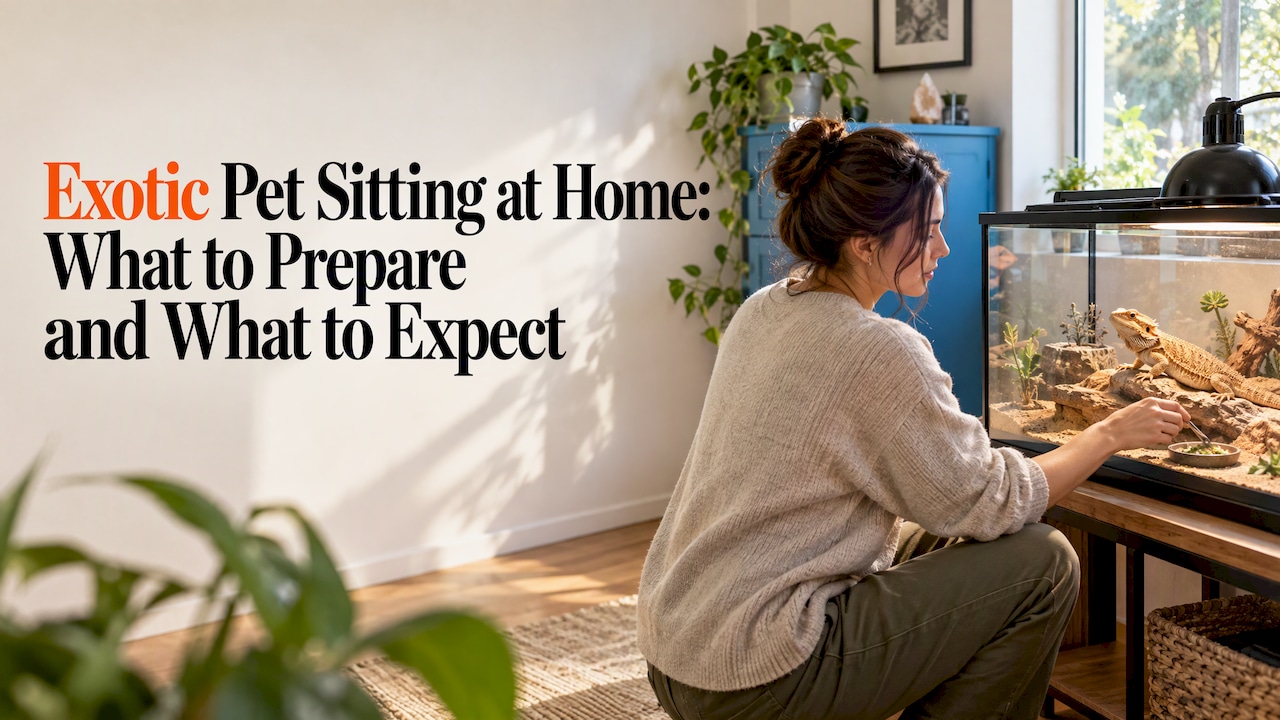
Exotic pet sitting at home means someone visits your house on a schedule to feed, clean and check your animal in its own enclosure, so the pet never has to travel or adjust to a strange room. In Los Angeles, we offer drop-in pet sitting for all pet types, at $50-75 per visit, with photo updates after each visit. The visit only works as well as the preparation behind it, so most of this guide is about what to hand over before you leave.
TL;DR
- A drop-in visit for an exotic pet covers feeding, fresh water, enclosure upkeep, a condition check, medication if needed and a photo update.
- Staying in the home keeps your animal’s heat, light and humidity setup exactly as it is. No transport, no new smells.
- Leave a written care sheet, vet and emergency contacts, and a signed authorization with a payment method. This is the step that most often decides how an emergency goes.
- Our drop-in visits cost $50-75. Medication is $10, an additional pet is from $15, a weekend visit is from $15 and a holiday visit is $25.
- If your pet needs a vet in an emergency, we also run the ride, including after hours.
Table of Contents
- Why in-home care suits exotic pets
- What a drop-in visit includes
- Which animals are a good fit
- What to prepare before the first visit
- A sample plan for a 5-day trip
- What drop-in sitting costs with us
- Planning for an emergency
- Questions to settle before booking any sitter
- Book drop-in care for your exotic pet
- FAQ
- Sources
Why in-home care suits exotic pets
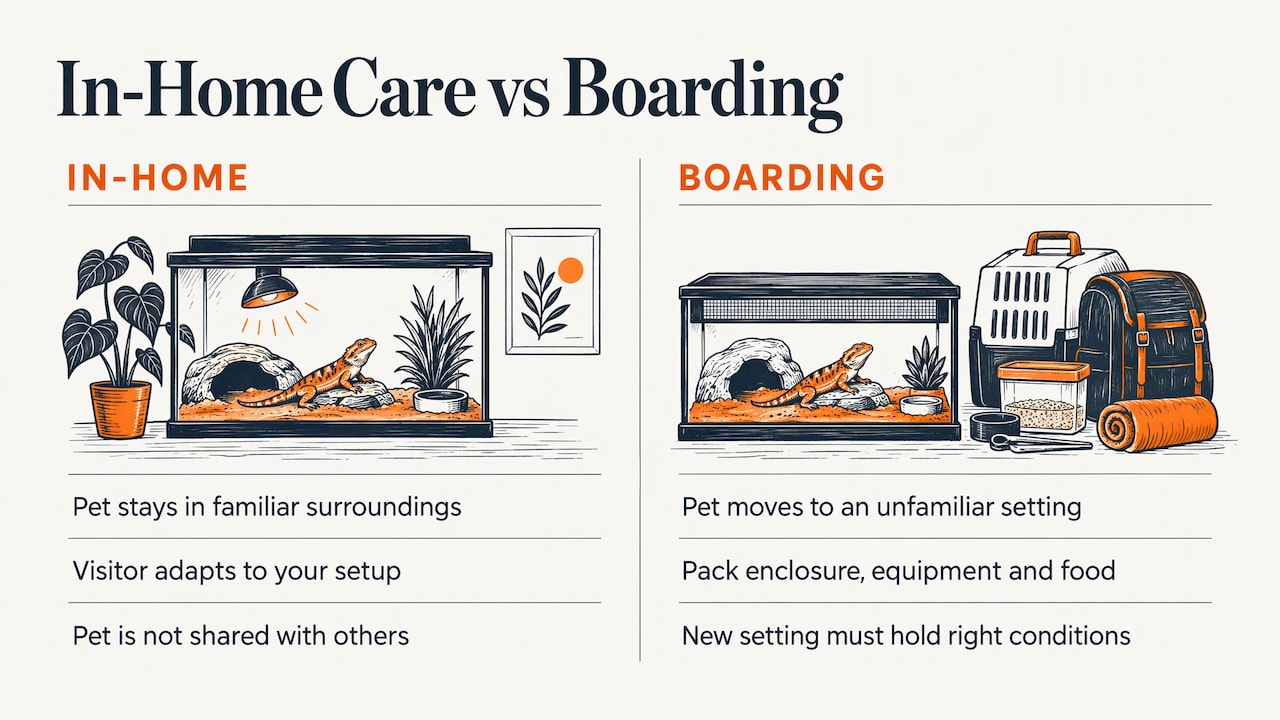
Exotic animals are creatures of routine and environment. A bearded dragon depends on a basking spot and UVB bulb it already knows. A parrot may stop eating in an unfamiliar room. A rabbit or guinea pig can be thrown off by a change in sounds and smells. Moving any of them to a boarding facility means packing the enclosure, the equipment and the food, and then hoping the new setting holds the right conditions.
In-home care avoids that. Your pet stays in familiar surroundings, and the person visiting adapts to your setup rather than the other way around. That is the core of our approach: care comes to the animal, and the animal is not passed between strangers or shared with other clients’ pets.
The Veterinary Center for Birds and Exotics describes in-home sitting as a legitimate option for owners, provided the sitter knows the pet, can recognize an emergency and has a plan to get the animal to a vet. Those three conditions are what the rest of this article builds around.
What a drop-in visit includes
A drop-in is a short, scheduled visit, usually once or twice a day, rather than an overnight stay. For an exotic pet, a visit typically comes down to this routine:
- Food and water. Fresh water, and food prepared and portioned the way you specify. Leave the diet in writing, down to quantity and time of day.
- Enclosure upkeep. Spot-cleaning waste, removing uneaten food, wiping bowls, and for litter-trained animals, cleaning the litter box.
- Habitat checks. Looking at the temperature, lighting and humidity your species depends on, and reporting anything off rather than improvising changes.
- Condition check. A look at appetite, droppings, movement and behavior, compared with the normal you described.
- Medication. Given exactly as your vet prescribed, on your schedule.
- Companionship. Time with pets that enjoy it, handled only as far as your instructions allow.
- A photo update. So you see your animal, not just hear that it is fine.
Our drop-in service covers feeding, dog walking, litter box cleaning, medication administration, condition checks, companionship and photo updates, for all pet types including large breeds and special-needs animals. If you share a household with a dog or cat alongside the exotic, the same visit can cover them too, for a small add-on per additional pet.
Which animals are a good fit
The phrase “exotic” covers an enormous range: small mammals such as hamsters, rats, chinchillas, guinea pigs and rabbits; birds from budgies to large parrots; reptiles and amphibians; fish; and invertebrates. Their needs differ sharply. A python is fed a thawed rodent on a long cycle and is best left alone between meals. A guinea pig needs fresh produce daily. A tropical fish tank needs a temperature and filtration check rather than any handling.
That range is why the written instructions matter more than the label. When you book, tell us the species, the number of animals and enclosures, and anything unusual about the setup. A care sheet that says exactly what “normal” looks like for your pet lets a visitor tell the difference between a quiet animal and a sick one.
What to prepare before the first visit
Plan on an hour of preparation, ideally a week before you travel. It is the part of the trip you control completely.
1. A one-page written care sheet
Put the routine on paper, in order: what is fed, how much, when, and what to do with leftovers. Add the equipment settings (target temperature range, lights on and off times, misting schedule), the species, and what normal behavior looks like. Add explicit limits too: what the sitter should not touch or adjust without calling you.
The ASPCA’s guidance for pet owners is consistent with this: give the sitter the pet’s age, weight, health issues, medications, diet and daily routine, along with a clear plan for what to do in an emergency.
2. Pre-portioned, labeled food and spare supplies
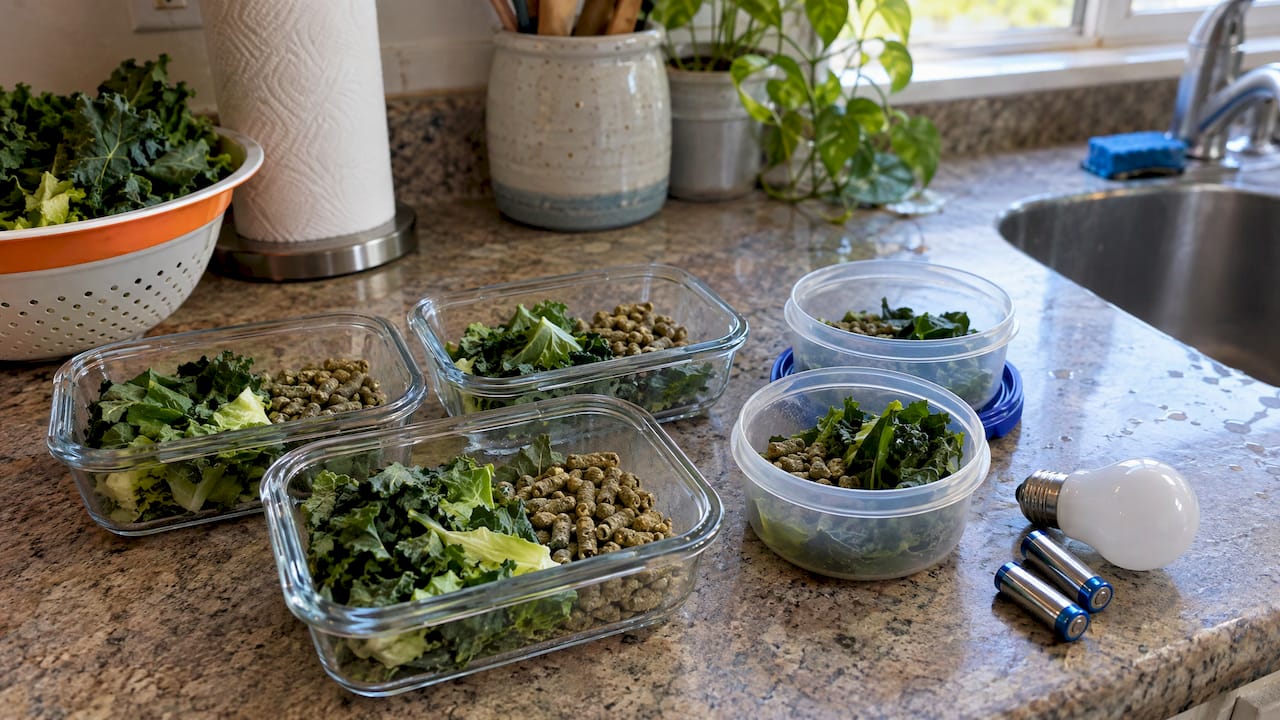
Leave all food and supplements where they can be found, labeled by animal if you have several. Pre-portioning removes guesswork on diet and quantity. Add a backup bulb, spare batteries for thermometers and a note on where the cleaning supplies and bedding live. A burned-out heat lamp on day two is a far bigger problem than a missed treat.
3. A walk-through of the enclosure
Show, do not just tell. Walk through the home with the person doing the visits: where the enclosure sits, how the lids latch, how the timers work, where the thermostat is. Escape prevention is a real concern with small, quick animals, so check latches together.
4. Contacts who can decide
Leave your regular exotic vet, the nearest emergency clinic that actually treats your species, and a local friend or family member. Not every hospital treats every species, which is why Animal Emergency Care advises checking this and listing the clinic’s address and hours ahead of time. Add the ASPCA Animal Poison Control Center number, 888-426-4435, which the ASPCA lists in its sitter guidance (a consultation fee may apply).
5. Written authorization and a way to pay
This is the one most owners forget. Emerald City Vet says the most common emergency problem it sees is an owner who has not authorized treatment or left payment instructions: without consent, the clinic can only provide basic treatment. Its fix is a written statement authorizing your sitter to approve care, a card on file or another agreed payment method, and a spending limit you are comfortable with.
The Veterinary Center for Birds and Exotics gives the same advice: tell your vet’s office in advance who is authorized to act if you cannot be reached, and sign a statement to that effect.
A sample plan for a 5-day trip
Say you own a leopard gecko, a cage of two rats and a cat, and you are away Monday to Friday. A workable schedule is one visit a day, in the evening when the rats are active and the gecko is fed. The care sheet lists insect feeding on alternate days, a daily water change, spot-cleaning of the gecko’s substrate, and fresh rat food with a litter check. Your cat’s meal and litter box are done in the same visit, with one additional-pet fee on top of the base visit price.
You leave the vet’s number, the emergency clinic that sees small mammals and reptiles, and a signed authorization. If a rat looks lethargic on Wednesday, you get a photo and a note the same evening, and the plan is already on the counter. Nobody has to improvise.
What drop-in sitting costs with us
Our prices are published, and each add-on is listed so you can total the trip before you book:
| Item | Price |
|---|---|
| Drop-in visit | $50-75 per visit |
| Medication administration | $10 |
| Additional pet | from $15 |
| Weekend | from $15 |
| Holiday | $25 |
For the five-day example above on weekdays, with one medication visit and one additional pet each time, you would add the medication and additional-pet fees to the visit price. Your final quote depends on the visit length, the number of animals and the timing, so tell us the details when you request it.
Planning for an emergency
Exotic pets hide illness well, so a sitter’s most important skill is noticing a change early and acting on it. Your care sheet should set a clear threshold for contacting you: a temperature outside a set range, refusing a meal, equipment failure, or any behavior you have not described.
Then comes the part that is easy to overlook: getting a sick animal to the clinic. A sitter who arrives to find a pet in trouble at 9 p.m. needs a way to transport it quickly, calmly and safely. Animal Emergency Care advises calling the clinic ahead, minimizing handling and keeping the animal secure during the trip.
This is where combining sitting and transport helps. We run private pet rides across Los Angeles, including after-hours and emergency rides, and the after-hours add-on is $40. The ride is private: your pet is not shared with other passengers or handed to strangers, and you get updates during the trip. Our guides on emergency transport when a sitter needs help and getting a pet to the ER fast walk through what to do in the first minutes.
If you are comparing options for getting a small pet to a vet or airport rather than only sitting, our pet transportation services page lists what we run.
Questions to settle before booking any sitter
Whoever visits your home, ask these. They are the same questions a vet’s office would raise:
- Have they cared for your species, or one close to it, in the past?
- Will they come for a walk-through before you leave?
- Do they know what an emergency looks like for your animal, and how they would get it to a clinic?
- Will you get a photo and a note after every visit?
- Who is responsible if you cannot be reached?
Tell us about your animals when you request a quote and we will plan the visit around the answers.
Our view: the home is the best habitat you have
We built Pets Go Taxi around one belief: a pet is calmest in the place it already knows. A drop-in visit lets an animal keep its routine, its lighting, its scents and its enclosure, while you get a photo and a note instead of silence.
What we have seen over and over is that the quality of a visit is set before the first one. A sitter with a clear care sheet, a signed authorization and a plan for the worst case is far more useful than one who is simply willing. So we ask owners for the details and we plan around them.
The other half is transport. Pets that need a vet at an awkward hour should not have to wait for a ride. The same person who looks after your animal at home can get it to the clinic, privately, with updates to you on the way. That connection is why we do both.
Brian
Book drop-in care for your exotic pet
If you are planning a trip, start with the drop-in pet sitting page. Drop-in visits are $50-75, with medication at $10 and each extra pet from $15. Send us your species, enclosure details and travel dates, and we will return a quote.

For a vet visit, grooming appointment or airport transfer, our local pet rides start from $100 per ride, and our drivers accept large breeds too.
FAQ
Does exotic pet sitting at home mean overnight stays?
Not necessarily. Most exotic pets do well with a drop-in visit once or twice a day, since their needs are feeding, cleaning and a check on the habitat. Our drop-in visits are short, scheduled stops, and you decide the frequency based on your species and how long you will be away.
What should I leave for the sitter?
Leave a written care sheet with diet, schedule and equipment settings, pre-portioned labeled food, spare bulbs and batteries, your vet’s and the nearest emergency clinic’s contacts, and a signed authorization with a payment method. The ASPCA also lists the Animal Poison Control Center number, 888-426-4435.
Can the sitter give medication?
Yes. We administer medication as your vet prescribed, for $10 per visit. Write down the name, dose and timing, and tell your vet’s office who is authorized to act on your behalf while you are away.
What if my pet needs a vet while I am away?
The sitter contacts you and the clinic from your list. With written authorization and a payment method on file, the clinic can treat beyond the basics. We can drive the pet to the clinic ourselves, including after hours for a $40 add-on.
Sources
- ASPCA: Pet Sitter Safety, What to Know Before You Go
- Emerald City Vet: Prep Your Pet Sitter
- Veterinary Center for Birds and Exotics: What should I look for when I board my exotic pet?
- Animal Emergency Care: Pet Sitter’s Guide to Veterinary Emergencies