

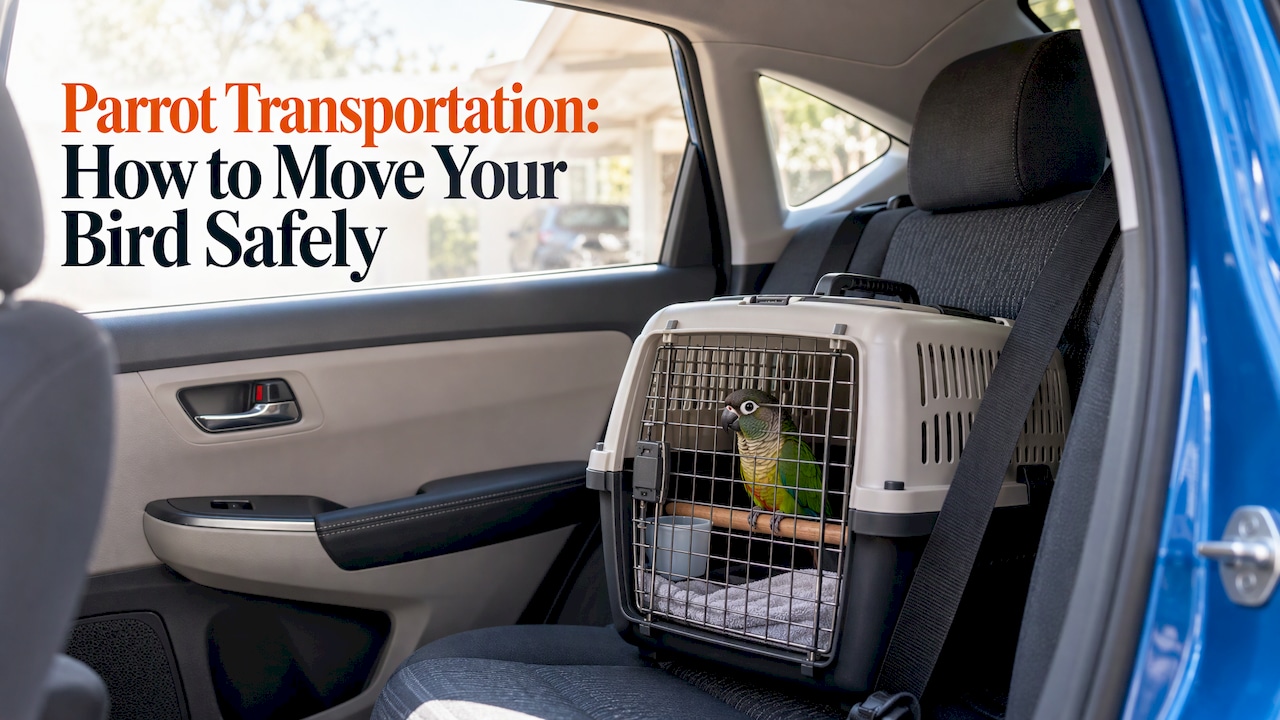
The safest way to transport a parrot is in a small, secured carrier, belted into the back seat, kept warm and out of drafts, with a calm driver who keeps the ride smooth. If you are in Los Angeles or Southern California and would rather not manage that alone, especially for a vet visit, an after-hours emergency or a long drive, we offer private rides for exotic pets with updates sent to you during the trip.
A parrot is not a small dog. It hides illness, it can be thrown off by a draft or a spilled water dish, and a loose bird in a moving car is a danger to itself and to the driver. This guide covers the carrier, the car, the health checks, flights and the urgent trip to an avian vet, and it says plainly where a private ride takes the work off your hands.
TL;DR
- Use the smallest carrier that fits your bird comfortably, remove toys and the water dish, and belt it into the back seat.
- Keep the carrier out of direct sun and vent blasts, and never leave your bird alone in a parked car.
- See an avian vet before a long trip, and know which emergency clinic near you actually treats birds.
- For a sick or injured bird, warmth, darkness and a secure carrier matter most, and the ride should start at once.
- Our private pet rides in Los Angeles start from $100, and after-hours or emergency trips add $40.
Table of Contents
- Set up the carrier before the car ride
- Get your parrot used to the carrier
- Health checks before you travel
- Flying with a parrot
- Driving a long distance with a parrot
- Getting a parrot to the vet
- When your parrot is sick or injured
- Our view on moving a parrot
- Book a private ride for your bird
- FAQ
- Sources
Set up the carrier before the car ride
The carrier is the most important decision. VCA Animal Hospitals says a parrot should never roam free in a car. It should ride in a small cage or bird carrier with perches and food cups, with toys and swings removed, and the cage secured with a seat belt.
The Parrot Club’s car safety guide adds details worth following:
- Choose the smallest carrier your bird fits in comfortably.
- Use no perch or a low one, and a sturdy handle that a belt can pass through.
- Belt it into the back seat like a child’s car seat, because a front-seat carrier could be crushed by an airbag.
- Label it with your contact information and the bird’s species and name.
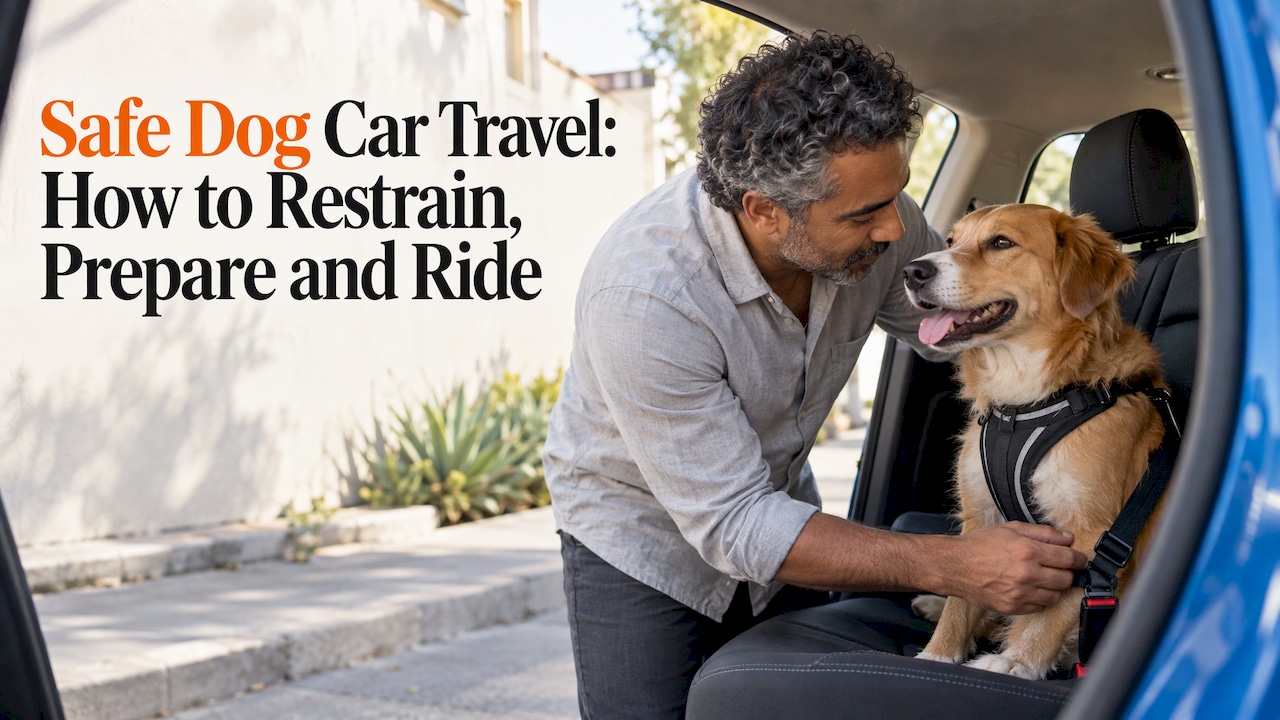
If you want a general reference for securing a pet in a vehicle, this piece on securing a pet in the car covers the principles of restraint and comfort, although a bird needs the cage-based setup above.
What goes inside
Skip the water dish. According to VCA, spilled water can soak and chill a bird, so offer small pieces of fruit or vegetable for hydration and bring the water bowl and fresh water for stops. A carrier floor lined with a square of rug sample works better than toweling, since toweling can snag a toenail. The same reference notes that a carrier with a full top feels more secure to a bird than an open-roof box.
Where it sits in the car
Chewy’s carrier guidance says to keep the carrier away from direct sunlight and strong heater or air-conditioning blasts, and never to leave a bird unattended in a parked car in uncomfortable weather. In Southern California, a parked car in the sun heats up quickly, so plan stops so that someone always stays with the bird.
Get your parrot used to the carrier
A bird that only sees the carrier before a vet visit learns to fear it. Lafeber’s avian nurse Lisa Bono recommends short rides that do not end at the vet, so the carrier does not become tied to a scary place.
A practical routine:
- Leave the carrier open near the cage for a week or two, with a treat inside.
- Close the door for a minute at a time while you stay in the room.
- Carry the carrier around the house, then to the car.
- Take a short drive around the block and come straight home.
- Build up to longer trips, always ending somewhere pleasant.
After a trip, check the carrier floor. A well-traveled parrot steps out unruffled and leaves normal droppings, while diarrhea or stress discoloration on the floor signals a rough journey. Watch for feather fluffing, trembling, rapid breathing or loud screaming during the ride, which are all signs the bird is stressed.
Health checks before you travel
Birds tend to hide illness until they are seriously unwell, so a bird that looks fine at home can be fragile by the time you reach the clinic. That is why a wellness visit with an avian veterinarian shortly before a long trip is worth booking. Ask the vet for species-specific advice, since a cockatiel and a macaw do not travel alike, and ask for the name of an emergency clinic near your destination.
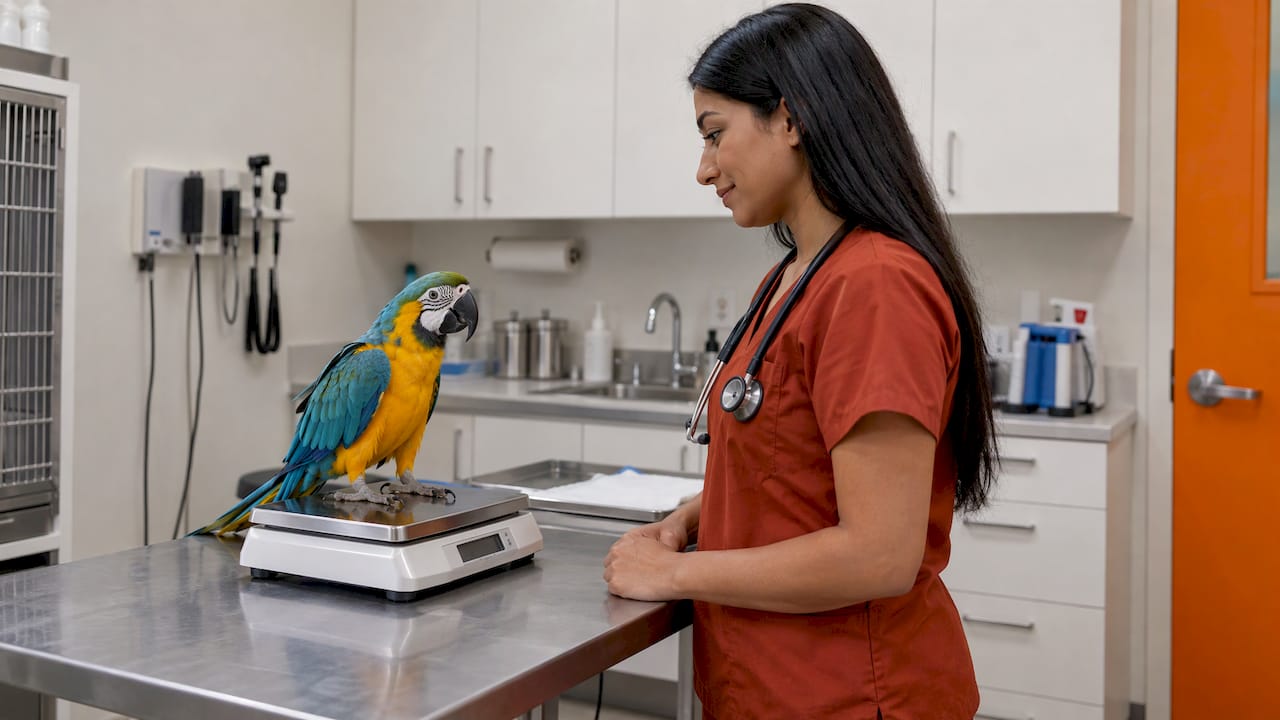
The Association of Avian Veterinarians (AAV) notes that not all 24-hour emergency clinics see birds, so find out in advance whom to call after hours. In Los Angeles, that call should be made before you need it.
Paperwork inside California and across state lines
For birds coming into California, the state’s agriculture department says psittacines such as parrots and cockatiels have no CVI or permit requirement. Monk and Quaker parakeets are restricted species, and extra rules can apply during a disease outbreak. Other states set their own rules: the USDA says it does not regulate interstate movement of pets by their owners, so the receiving state decides. Check the destination state’s animal health office before you leave.
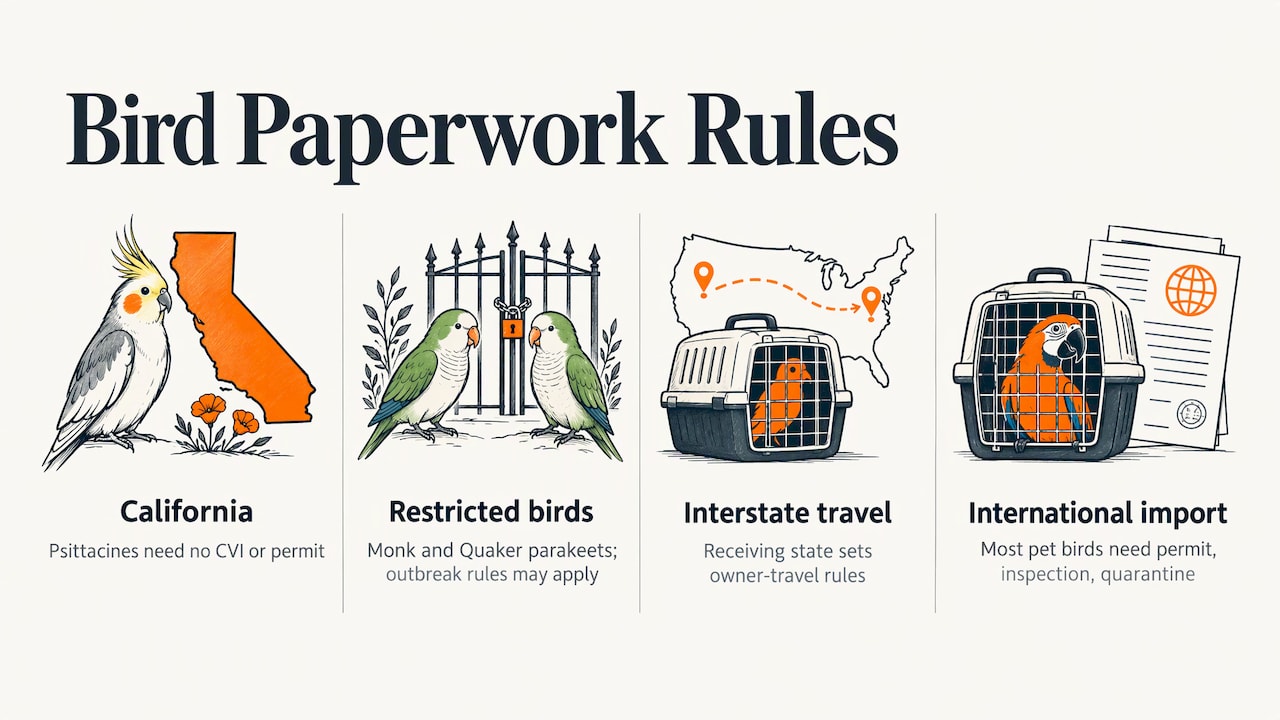
Importing a bird from another country is a different process: the USDA says most pet birds need a permit, port inspection and quarantine.
Flying with a parrot
Flying is the hardest option for a bird. Delta, for example, allows household birds only on domestic U.S. flights, for a $125 one-way fee. The bird must be at least 10 weeks old and stay in a secured kennel that fits under the seat. Policies differ by airline and change, so read the carrier’s own pet page before you book, and confirm in writing.
Before booking, check:
- whether the airline accepts birds at all in the cabin on your route;
- the carrier size limits and the weight of bird plus carrier;
- whether your state of destination needs a health certificate;
- whether your species is protected, since birds on the CITES lists may need extra permits.
Cargo is rarely a good idea for birds. Moving-industry guidance also recommends avoiding cargo for birds, and notes that live animals cannot ride on household-goods moving trucks.
If the airport is the hard part, such as getting you and the bird to the terminal calmly and on time, that is where a private ride helps. We run airport pet transfers in Los Angeles and Southern California.
Driving a long distance with a parrot
For a move or a long drive, start vet visits and carrier practice two to four weeks ahead. Cover three sides of the carrier, keep the cabin at a steady temperature, drive smoothly, and stop at rest areas where you can stay with the bird. Do not open the carrier in the car.
If you have no car, or the drive is long, a private ride is an option. We publish these one-way prices for trips from Los Angeles (as read on our site in November 2026):
| Route | Price per ride |
|---|---|
| Santa Barbara | $375 |
| Palm Springs | $450 |
| San Diego | $500 |
| San Francisco | $1050 |
| Sacramento | $1200 |
For routes to the north, our guide to pet transport from Los Angeles to San Francisco explains what the trip involves.
Getting a parrot to the vet
Call the clinic first to confirm that they see birds. Ask whether your bird should be fasted, whether to bring a fresh dropping sample, and which records to bring. Then:
- Use a rigid, ventilated carrier where the bird can stand and turn, with a nonslip liner.
- Pre-warm or pre-cool the car.
- Cover three sides of the carrier.
- Secure it with a seat belt or wedge it on the floor.
- Drive calmly with the windows closed.
Small birds such as budgies and cockatiels can go on a short trip to the vet in a cardboard box with air holes and a secure lid, per VCA, but they should not stay in it for long. A parrot that stays in a cardboard box is also a bird you cannot see, so check on it.
If you do not drive, or your bird needs a calm hand at the door, our local pet rides start from $100. Each ride is private, so your pet is never handed to a stranger or put in a shared ride. We send updates while the ride is underway.
When your parrot is sick or injured
The Merck Veterinary Manual names three priorities for transporting a sick bird: warmth, darkness and a secure carrier. Use a ventilated carrier, keep it warm with a heating pad or warm water bottle, and cover at least three sides with a towel. A huddled, weak or unresponsive bird, or one lying on the cage bottom, needs to go immediately. So does a bird with ongoing bleeding from a wing, beak or foot.
The AAV adds that gentle heat of 80 to 85°F and quiet suits most injured or sick birds. Put the heating pad on low with towel layers between pad and bird. A bleeding feather can be pinched closed on the way, but a broken feather should not be pulled out.
Go to an avian vet at once for labored breathing, seizures, collapse, uncontrolled bleeding or suspected toxin exposure. A fluffed bird that is sleeping more than usual is also serious, per the AAV list of warning signs. Phone the clinic on the way so the team is ready.
Bring current medications, recent records and photos of the droppings or the cage setup. SpectrumCare suggests asking the emergency clinic whether an avian-experienced vet is on duty, whether it can keep birds overnight, and whether it has oxygen support, X-rays and bloodwork.
The trip when you cannot drive
An emergency at 11 p.m. is when a private driver matters. Our emergency transport covers after-hours availability for a $40 fee on top of the ride, and driver wait time is $65 per hour if you need the driver to stay at the clinic. Rides beyond 10 miles add $3.50 per mile, and rush-hour trips add $25. Our page on emergency pet transport explains how to get a pet to the ER quickly.
Our view on moving a parrot
Parrots are social, sensitive animals, and most transport problems we hear about come down to stress and handling. A bird that is passed between strangers, or put in a shared ride with barking dogs, has a harder trip.
That is why every ride we run is private, handled by the same experienced driver, with no shared rides and no hand-offs. We pay special attention to anxious and special-needs pets, and we send you updates during the trip so you are not left guessing.
When you book, tell us your bird’s species, size and carrier, and where you are going. We tailor each ride to the individual pet. For a bird, the best ride is a quiet, steady one, and that is what we plan for.
Brian
Book a private ride for your bird
We provide private transportation for dogs, cats and exotic pets across Los Angeles and Southern California, to vet visits, groomers, airports, and on long-distance trips. Local rides start from $100, and we quote custom prices based on distance, pet size, timing and add-ons. Tell us about your bird and we will build the ride around it. See our pet transportation services or request a ride from our home page.
If you are going away and want your bird to stay at home, we also offer drop-in pet sitting at $50 to $75 per visit, including feeding, condition checks, medication administration (an extra $10) and photo updates.
FAQ
What is the best way to transport a parrot?
Use a small, secure carrier with a low perch and no water dish, belted into the back seat of the car. Keep it out of direct sun and vent blasts, and cover three sides if your bird is nervous. Keep the drive smooth and never leave the bird alone in a parked car.
Can I take my parrot on a plane?
Some airlines accept household birds on domestic flights, in a kennel that fits under the seat, but policies differ and change. Delta lists a $125 one-way fee for birds, for example. Confirm with your airline before booking, and ask an avian vet about health papers and any rules at your destination.
Does my parrot need a health certificate to travel in California?
California’s agriculture department lists no CVI or permit requirement for parrots and other psittacines entering the state, though Monk and Quaker parakeets are restricted. Other states and airlines may ask for a certificate, so check before you go.
How do I get my parrot to the vet without a car?
Book a private ride and tell the driver your bird’s species and carrier. We take exotic pets to vet visits across Los Angeles and Southern California, with rides from $100. Call the clinic first to confirm they treat birds.
Sources
- Transporting Your Bird: Car and Air Travel, VCA Animal Hospitals
- Car Safety, The Parrot Club Bird Safety Corner
- Focus on Catching and Transporting of Parrots, parrots.org
- Bird Carriers, Chewy
- Vet Visit Prep: Reducing Stress, Lafeber
- Avian and Poultry Entry Requirements, CDFA
- Bring a Pet Bird into the United States, USDA APHIS
- Pet Travel Options, Delta Air Lines
- Moving Long Distance With Pets
- Injuries and Accidents of Pet Birds, Merck Veterinary Manual
- Injury Prevention and Emergency Care, AAV
- Signs of Illness in Companion Birds, AAV
- Emergency Vet for an African Grey Parrot, SpectrumCare
- How to safely transport your dog in the car, KODA & COO
Pingback: Exotic Pet Transport: How to Move Your Pet Safely in California
Pingback: Yellow-chevroned Parakeet: ID, Origins and Status in California