

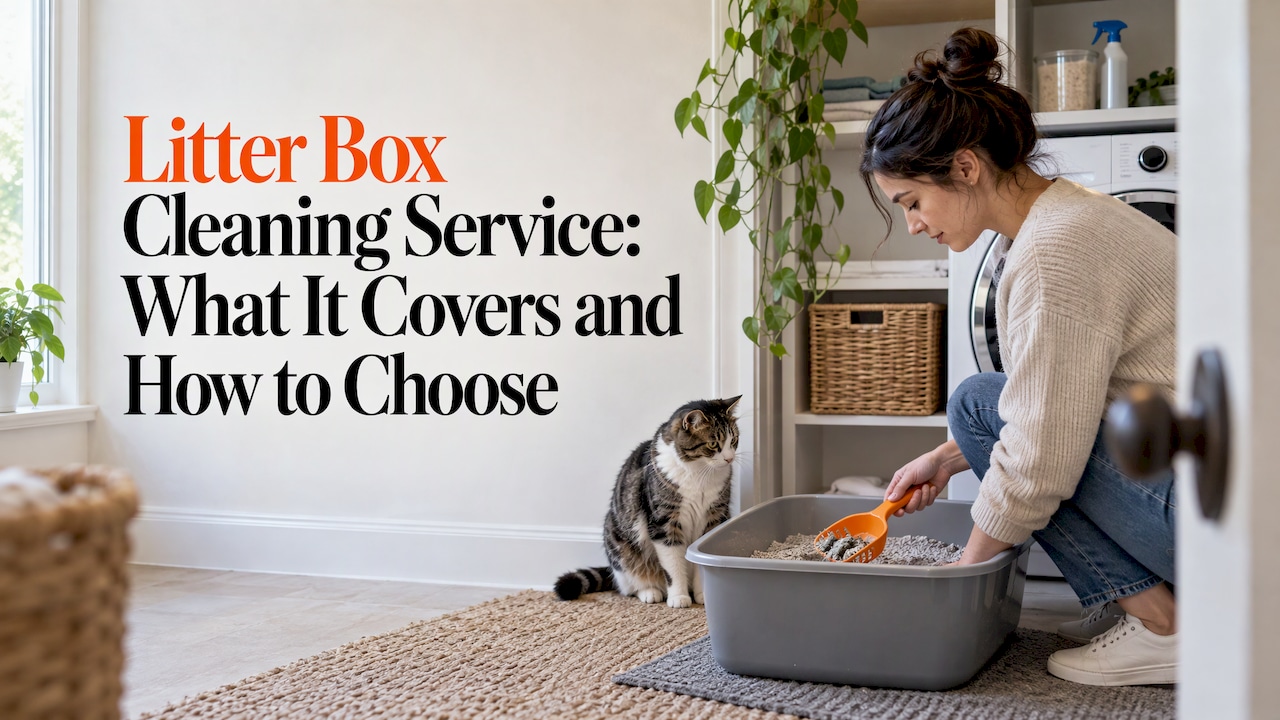
A litter box cleaning service is a person who comes to your home, scoops and refreshes the box, and leaves your cat’s routine intact while you are at work or away. For most cat owners in Los Angeles the best version is a drop-in pet sitting visit, because the same visit also covers feeding, medication and a check on your cat. We offer exactly that: drop-in pet sitting at $50 to $75 per visit, with litter box cleaning included in the visit.
Below: how often a box really needs attention, what to hand a caregiver, what a visit costs, how to handle litter on a road trip, and how to dispose of it properly.
TL;DR
- Veterinary sources agree on daily scooping. A full empty-and-wash is weekly to every few weeks, depending on the source.
- Do not leave a cat unchecked for more than 12 hours, according to the San Francisco SPCA. A once-a-day sitter should be paired with extra boxes.
- Our drop-in pet sitting runs $50 to $75 per visit and covers litter box cleaning, feeding, medication, condition checks and photo updates.
- Pregnant people and people with weakened immune systems should have someone else clean the box, per the CDC.
- For road trips, pack a dishpan, familiar litter, a scoop, bags and absorbent pads, and keep the cat in the carrier while moving.
Table of Contents
- What a litter box cleaning service actually does
- How often a litter box needs cleaning
- Who should not be scooping at all
- Arranging litter box care while you are away
- What drop-in cat care costs in Los Angeles
- Disposing of used litter properly
- Cat litter on road trips
- Our view on litter box care
- Book a visit or a ride
- FAQ
- Sources
What a litter box cleaning service actually does
The name covers three different jobs, and it helps to know which one you are buying.
Scooping visits. Someone removes clumps and waste, tops up the litter and takes the bag out. This is the baseline.
Deep cleans. The box is emptied, scrubbed and refilled. This is a monthly or periodic task, not a daily one.
Drop-in care that includes the box. The visitor scoops, but also feeds your cat, refreshes water, gives medication and notices if something is off. For a cat, this is what you usually want, because a litter box is the quickest place to spot a problem. A box that is suddenly untouched, or clumps that look unusual, tell a caregiver something is wrong long before a cat shows it any other way.
Our drop-in visits are the third kind. They include feeding, litter box cleaning, medication administration, condition checks, companionship and photo updates, and they work for cats, dogs and exotic pets, including special needs animals. Because the care happens in your home, your cat stays in familiar surroundings.
How often a litter box needs cleaning
The schedule is the reason people hire help, so it is worth getting it straight. Vets and shelters agree on the daily part and differ a little on the deep clean:
| Source | Scooping | Full clean |
|---|---|---|
| VCA Animal Hospitals | Daily, more often for some cats | Empty and refill weekly, scrub monthly with hot water and mild soap, replace the box yearly |
| Texas A&M veterinary medicine (2023) | At least daily | Wash and replace litter every 2 to 3 weeks, about 2 inches of clumping litter |
| ASPCA | At least daily | Wash weekly with warm water and unscented soap, baking soda, or no soap |
| AAHA/AAFP life-stage guidelines (2021) | Daily | Clean and replace boxes regularly; hot water is best, avoid strong chemicals |
The common thread is that daily scooping is the floor. If you are away for a weekend and nobody comes, the box is two days behind before you walk in.
Why it matters beyond the smell
A dirty box is not only unpleasant. A Texas A&M veterinary expert warns that cats with a dirty or uncomfortable box may hold off eliminating until they have to, which can lead to constipation or urinary problems. The ASPCA treats cleanliness, box size, location and litter preference as connected factors in preventing house-soiling.
That last point matters for a sitter. Scented cleaners can make a cat avoid the box, and most cats prefer unscented litter and dislike liners and lids. The ASPCA also recommends one box per cat plus one extra. If your cat is used to a particular setup, write it down and leave it exactly as it is.
Covered boxes and automatic boxes
Cats are divided on covered versus open boxes. The AAFP and ISFM guidelines recommend open boxes where possible because they are easier to monitor and scoop, and small covered boxes can make it hard for larger cats to posture normally. The same guidelines note that no product removes the need to clean and maintain boxes regularly. Whatever you own, someone still has to scoop it and wash it on a schedule.
Who should not be scooping at all
There is a health reason to hand the job over. Cat feces may contain Toxoplasma gondii, and the CDC’s 2026 guidance says infection can happen when contaminated hands reach the mouth. It can be serious for people with weakened immune systems and can harm an unborn child. The CDC advises pregnant people and people with weakened immune systems to have someone else clean the litter box when possible. If someone else is not available, scoop daily, wear disposable gloves, throw them away afterward and wash your hands with soap and water.
For everyone else, the CDC’s cat guidance says to change litter daily, wash hands after cleaning with soap and running water, and keep the box away from children, other animals and food-preparation areas.
If you are pregnant or immunocompromised, talk to your doctor about your own precautions. A drop-in visit takes the daily job off your list entirely.
Arranging litter box care while you are away
For a trip, the question is how many visits your cat needs. The San Francisco SPCA advises never leaving a cat for more than 12 hours without someone checking in. If a sitter can come only once a day, it suggests providing extra litter boxes. For absences longer than 10 days, it recommends a caregiver spend the night a few times a week. Purina notes that cat-sitting services commonly visit at least twice daily to feed, play and clean the box, though services vary.
That gives you a simple rule of thumb:
- A weekend (1 to 3 days): one or two visits a day, plus a second box if only one visit fits.
- A work trip of about a week: daily visits at minimum, two where the budget allows.
- Longer than 10 days: daily visits plus overnight stays a few times a week.
What to leave for the caregiver
The Peninsula Humane Society & SPCA lists what a caregiver needs: the box location, preferred litter type and amount, disposal instructions and where supplies are stored. It also recommends written daily-care and emergency instructions, your vet’s contact information, and emergency contacts who can make pet-related decisions. The same guidance suggests a meet-and-greet before you leave, so the caregiver sees the routine and supplies in person.
The San Francisco SPCA adds one more item: written authorization for emergency treatment, in case the caregiver has to get your cat to a vet while you are away.
A one-page sheet works well:
- Where each box is and which litter you use, with how deep to fill it.
- Where the bags, scoop and spare litter are kept, and where used litter goes.
- Feeding amounts and any medication, with times.
- Your vet’s number, the nearest emergency clinic and your own contact details.
- Anything unusual for your cat: hiding spots, a nervous temperament, a box habit.
What drop-in cat care costs in Los Angeles
Our prices as published on our site:
| Item | Price |
|---|---|
| Drop-in pet sitting | $50 to $75 per visit |
| Additional pet | from $15 |
| Weekend | from $15 |
| Holiday | $25 |
| Medication administration | $10 |
Example: two cats on a weekday visit with one medication would be the visit rate, plus from $15 for the second cat, plus $10 for the medication. Quotes are custom, since timing and the pets’ needs vary, so confirm the final figure when you book.
If you want the box handled and your cat checked on, that is the whole job in one visit, with a photo update so you can see your cat is fine.
Disposing of used litter properly
A good service takes the waste with it or bags it for your trash. If you handle it yourself, put used litter in a securely closed bag and place it in the trash. The University of Rhode Island’s pet waste factsheet says not to flush or bury used litter. Dumping it outside is not a harmless shortcut either: the Huron River Watershed Council notes that waste left outdoors can wash into storm drains, so bag it for the trash instead.
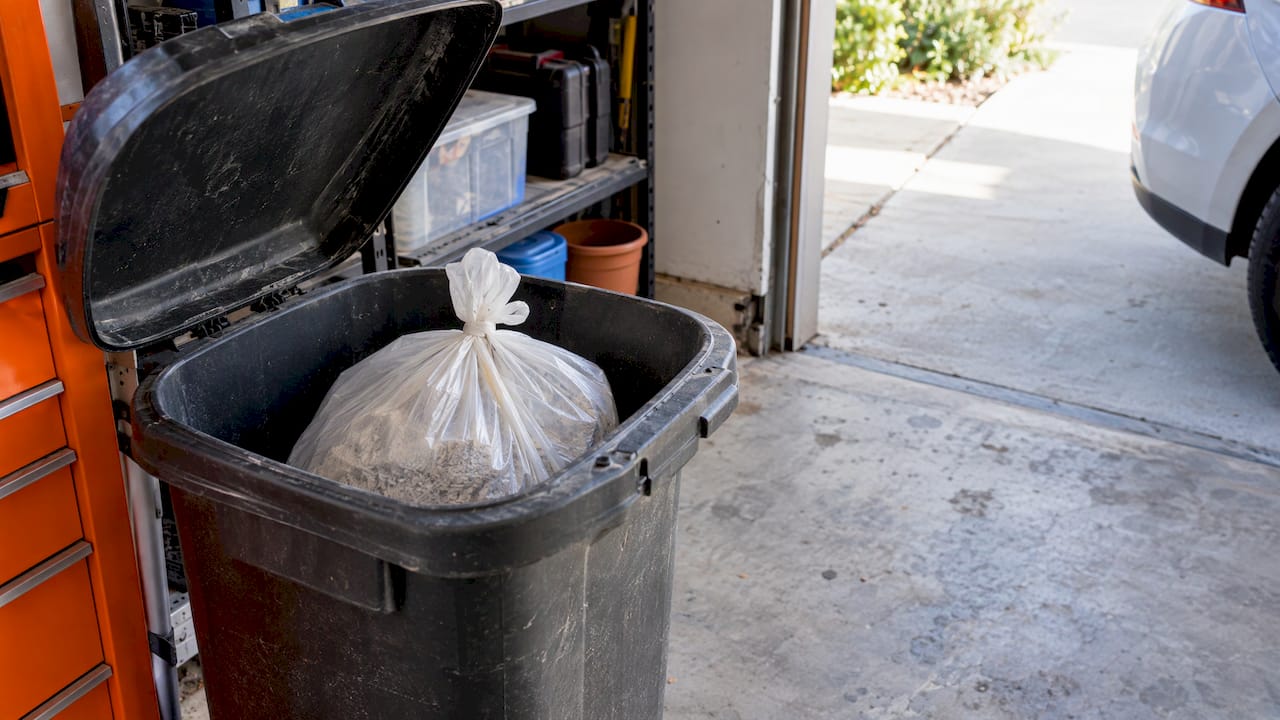
The bin itself takes a beating from this. If it starts to smell, a guide on cleaning a trash can walks through how to freshen it.
Cat litter on road trips
If your cat travels with you, the box travels too. VCA’s road-trip guidance lists the basics: familiar litter, a scoop, disposal bags and a plastic dishpan that can serve as a travel box. Line the carrier with absorbent pads and pack extra pads, paper towels, gloves and bags for cleanup. Keep the cat confined while driving, and never leave a cat alone in the car, because the interior can reach dangerous temperatures quickly.
A few things make it easier:
- Introduce the travel box at home first. Preventive Vet notes that cats may not use a box when nervous, so offer a sturdy, waterproof box with the cat’s usual litter before the trip.
- Keep the cat in the carrier. The same source cautions against letting a cat out in the car to use a box, because it may hide somewhere dangerous. A travel box should fit inside the carrier.
- Pack for delays. Cornell’s Feline Health Center lists a small litter box, two weeks of litter, a scoop, waste bags, liquid soap and paper towels in a cat emergency kit. The same kit is a good model for any long drive.
If the drive is the hard part, we do the driving. Our private rides cover local trips from $100 and long-distance runs: $375 to Santa Barbara, $450 to Palm Springs, $500 to San Diego, $1,050 to San Francisco and $1,200 to Sacramento. Each ride is private, with no shared rides and no handoffs to strangers, and we send updates during the trip. Details for cats are on our cat transport page.
Our view on litter box care
Most owners come to us thinking the job is the litter box. It is not. The box is where the care happens, and the real job is that someone who knows your cat shows up on schedule, notices what has changed and tells you.
We built our drop-in visits around that idea. The visit includes cleaning the box, feeding, medication, a condition check and photos for you. Your cat stays at home, in the space it knows, rather than being moved somewhere new.
The same thinking drives our rides. Pets are never handed off to strangers or put in shared rides. We take large breeds that other services turn down, and we are available after hours when an emergency does not wait for morning.
If you are heading out of town, or you simply cannot be home at noon, book the visit and give us a one-page routine. We will take it from there.
Brian
Book a visit or a ride
For a cat that needs its box cleaned and its day checked, drop-in pet sitting is $50 to $75 per visit across Los Angeles. If your cat also needs a ride to the vet, the groomer or the airport, you can see everything we cover on our services page.

Tell us how many cats you have, where the boxes are and how long you will be away, and we will quote the visit.
FAQ
How often should a litter box be cleaned?
Scoop at least once a day. Full emptying and washing runs from weekly to every two to three weeks depending on the source, with VCA suggesting a monthly scrub with hot water and mild soap. Some cats need more frequent scooping, so follow your cat’s habits.
Can I leave my cat alone for a weekend with just extra litter boxes?
The San Francisco SPCA advises against leaving a cat unchecked for more than 12 hours. For a weekend, arrange at least one visit per day and add extra boxes if that is all that fits. A caregiver also notices a change in appetite, behavior or the box that automatic feeders cannot.
What should I tell a sitter about the litter box?
Tell them where the box is, which litter and how much, where supplies are kept and how to dispose of waste. Add your vet’s contact details and an emergency contact. A meet-and-greet before you travel makes the handoff smoother.
Can I just dump cat litter outside?
No. Bag used litter in a securely closed bag and put it in the trash. Do not flush or bury it, and do not leave it outdoors, where it can wash into storm drains.
Is it safe to scoop the litter box while pregnant?
The CDC advises pregnant people and people with weakened immune systems to have someone else clean the box when possible. If that is not possible, scoop daily, wear disposable gloves and wash your hands with soap and water afterward. Ask your doctor about any further precautions.
Sources
- Housetraining for Kittens and Cats, VCA Animal Hospitals
- A Guide To Litter Box Etiquette, Texas A&M Veterinary Medicine
- Litter Box Problems, ASPCA
- General Litter Box Considerations, AAHA
- AAFP and ISFM Guidelines for Diagnosing and Solving House-Soiling
- About Cleaning and Disinfecting Pet Supplies, CDC
- Cats, Healthy Pets, Healthy People, CDC
- Traveling (Cats), San Francisco SPCA
- Boarding Catteries and Cat Sitting Advice, Purina US
- Prepping for a Cat Sitter, Peninsula Humane Society & SPCA
- Water Quality: Pet Waste, University of Rhode Island
- Pet Waste, Huron River Watershed Council
- Road Trips and Car Travel With Your Cat, VCA Animal Hospitals
- How to Travel By Car With a Cat, Preventive Vet
- Disaster Preparedness, Cornell Feline Health Center