

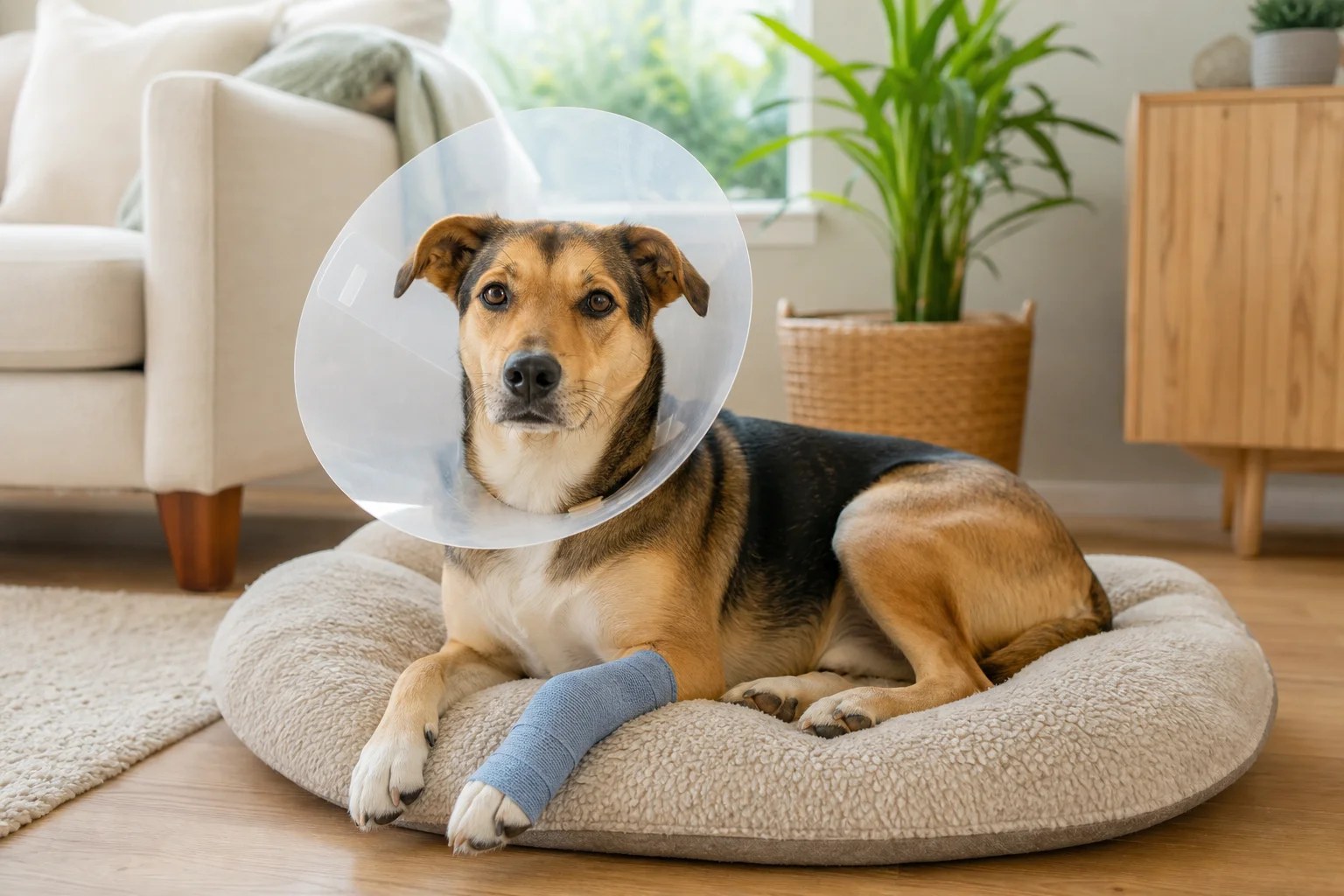
The vet calls and says your dog is ready to pick up at four. What they do not say is how you are supposed to get a groggy, cone-wearing, sixty-pound dog who is not allowed to jump, climb, or be lifted by the belly out of the clinic, into your car, and home without hurting him. That ride home is the first step of recovery, and it is the step most owners have to improvise. It does not have to be improvised.
Key Takeaways
- A dog coming home after surgery should not jump into a car, climb stairs, or be carried in a way that pulls on the incision.
- Keep the cone on for the whole ride, even for a short trip, because a few seconds of licking can damage an incision.
- A low, roomy vehicle, a supported lift, and a quiet ride do most of the work; the drive itself should be the calmest part of the day.
- If you cannot lift your dog safely on your own, book the ride instead of risking the incision, your back, or both.
Table of Contents
- [Why the ride home is part of the surgery](#why-the-ride-home-is-part-of-the-surgery)
- [Getting a sedated dog into the car safely](#getting-a-sedated-dog-into-the-car-safely)
- [The drive itself: quiet, flat, and short](#the-drive-itself-quiet-flat-and-short)
- [When a booked ride is the safer call](#when-a-booked-ride-is-the-safer-call)
- [Frequently asked questions](#frequently-asked-questions)
Why the ride home is part of the surgery
Discharge instructions from veterinary teaching hospitals are consistent on one point: the first day home is about rest, warmth, and confinement. The aftercare guidance from Tufts Cummings School tells owners to keep a pet confined to a crate or small room for the first days, with no running, rough play, or jumping while healing. That restriction starts at the clinic door, not at your front door. A dog who leaps into an SUV in the parking lot has already broken the first rule of recovery.
Anesthesia also lingers. Post-operative instructions from Saguaro Veterinary Surgery note that the effects of sedation may last for up to 48 hours, and a pet may be unsteady, groggy, or unable to focus. An unsteady dog in a moving car needs a flat, padded surface and a driver whose only job is the road. If you are also the nurse holding him steady in the back seat, nobody is doing either job well. For a refresher on how a private ride is set up, see how a pet taxi works before pickup day.
The cone is not optional in the car
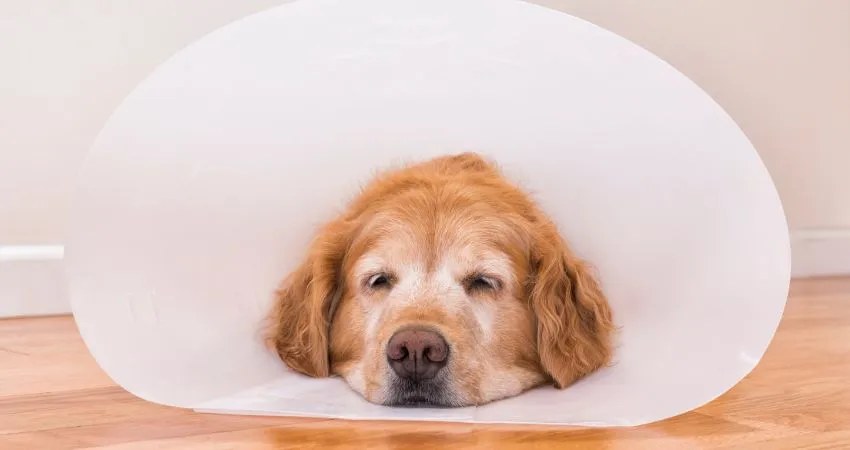
It is tempting to take the cone off for the ride so your dog can settle. Do not. The discharge instructions published by Second Chances Veterinary Care stress keeping the Elizabethan collar on, because licking an incision leads to chewing out sutures, which can happen in a matter of minutes. In a car, you cannot watch him every second. The cone stays on until he is settled at home, and Tufts gives the same direction in its aftercare guidance: the collar is worn at all times during the first week after surgery.
Getting a sedated dog into the car safely
The load-in is where most home pickups go wrong. A sedated dog cannot help you, and a large one is dead weight in exactly the places you should not grab. Work around the incision, never across it.
Support the body, do not scoop the belly
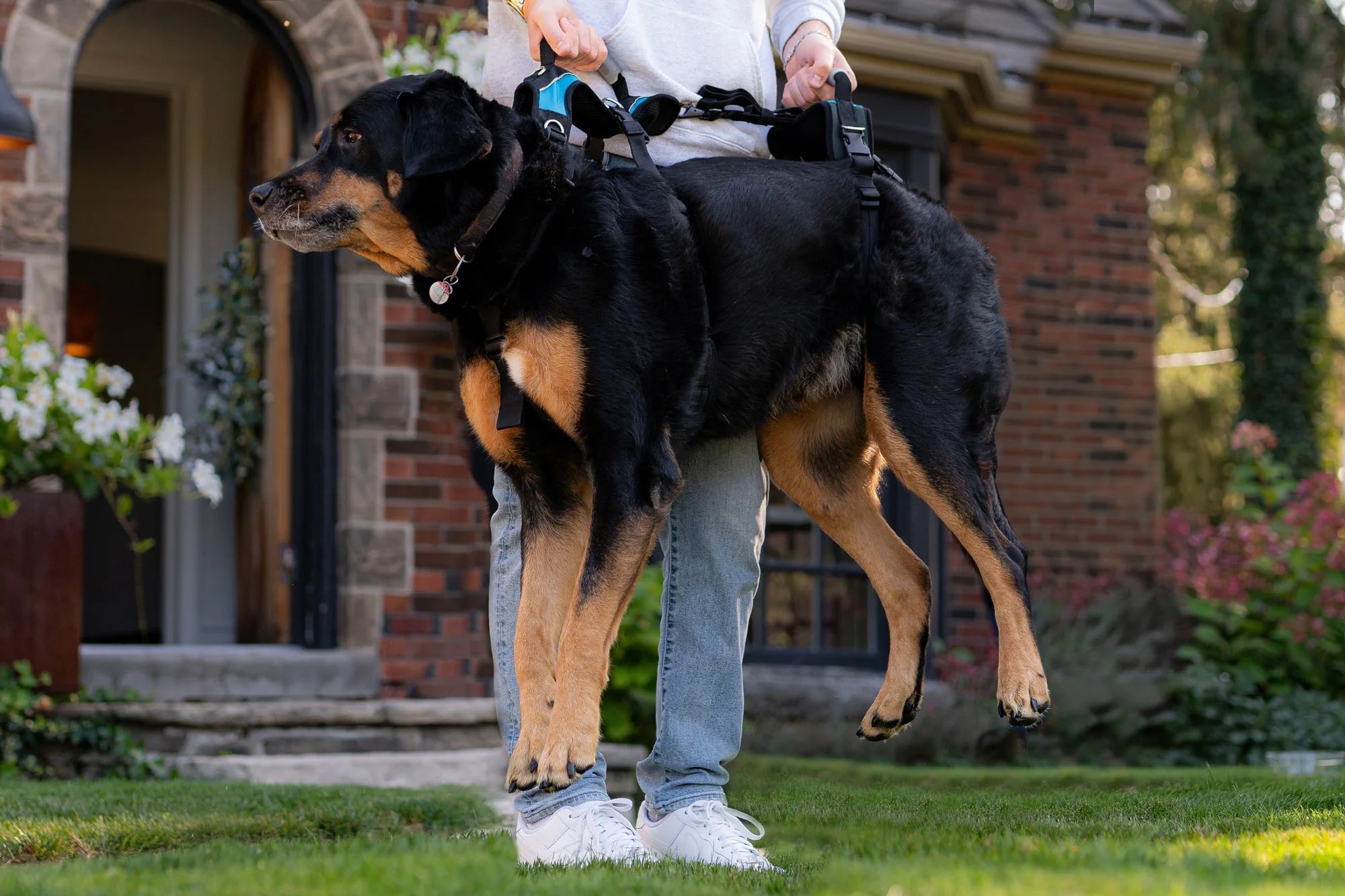
Lift with support under the chest and under the hindquarters, or use a handled support harness that spreads the weight along the body. The recovery guide from Isla Veterinary is blunt about why this matters: excessive activity and strain can damage the incision and cause complications that require additional surgery. A belly scoop puts pressure exactly where the surgeon worked. A harness lift, a low vehicle floor, and a second pair of hands turn a risky heave into a slow, controlled move. The same low, level load-in is what makes transporting a large dog workable on any day, not just surgery day.
Let the car come to the dog
Park as close to the clinic door as you can, lay a non-slip mat or blanket on a flat surface before you go in, and clear everything else out of the space. A dog who has to be rearranged mid-lift is a dog who gets twisted. Once he is in, he should be able to lie flat in his natural position with the cone clear of the seat edges. If your dog is also a nervous traveler on a normal day, the signs in dog car anxiety are worth knowing, because sedation plus anxiety is a combination to plan around, not discover.
The drive itself: quiet, flat, and short
Drive like the patient is in the back, because he is. Gentle starts, gentle stops, no sudden lane changes. Keep the cabin cool and quiet, skip the food stop, and go straight home. At home, reverse the process: low step out, support under chest and hindquarters, straight to the quiet room you set up before you left. The home setup matters as much as the drive. Second Chances advises a soft, clean bed in a quiet, draft-free room, with dogs going outside only for short leash walks to relieve themselves.
Pain control is the other half of a calm ride home. The AAHA pain management guidance emphasizes teaching owners to recognize and monitor pain, because a dog who is hurting will shift, cry, and strain against rest in the car. Give prescribed medication exactly as directed, on the clinic's schedule, and never substitute human pain medicine. If your dog cries continuously, cannot settle, or the incision looks wrong when you get home, that is a call to the clinic, not a wait-and-see. For after-hours problems, know your options for emergency vet transport before you need them.
When a booked ride is the safer call
Some pickups are more than one person and a sedan can do safely: a large dog, a spinal or orthopedic procedure, a clinic across town. That is the ride Pets Go Taxi exists for. I drive a full-size Suburban with a low, flat cargo space, I load your dog with support rather than a heave, and your dog rides alone, with no other animals and no stops. Local rides start at $100, and a post-surgery pickup can be booked through the contact page. If the pickup turns urgent instead of planned, the same vehicle handles emergency pet transport across Los Angeles.
Our view: The surgery is the part owners prepare for. The ride home is the part they wing, and it is the part I see go wrong: a jump into a tall SUV, a belly lift, a cone off "just for the drive." None of it is carelessness; it is a hard physical job handed to a worried person at the worst moment. Plan the ride with the same care as the procedure, and recovery starts the way it should. — Brian Ka, Pets Go Taxi
Frequently asked questions
Can my dog ride in the front seat after surgery?
No. He needs a flat, padded space where he can lie in a natural position without climbing, bracing, or being held. The back of a roomy vehicle, on bedding, is the right setup.
Should the cone come off for the car ride?
No. Clinics direct owners to keep the collar on at all times during early recovery, because brief licking can open or infect an incision. It comes off at home only as your vet directs.
How do I lift a big dog without hurting the incision?
Support under the chest and hindquarters, or use a handled lift harness, and keep the move slow and level. Never scoop under the belly of a dog who has had abdominal surgery, and get a second person rather than straining.
What if my dog cries or seems in pain on the way home?
Pull over safely, check that he is positioned comfortably and the cone is not jammed, and call your clinic for guidance. Do not give extra medication or any human pain reliever unless the clinic tells you to.
Sources
- Tufts Cummings School aftercare guidance
- Second Chances Veterinary Care discharge instructions
- Saguaro Veterinary Surgery post-operative instructions
- Isla Veterinary recovery after incisional surgery
- AAHA pain management guidance