

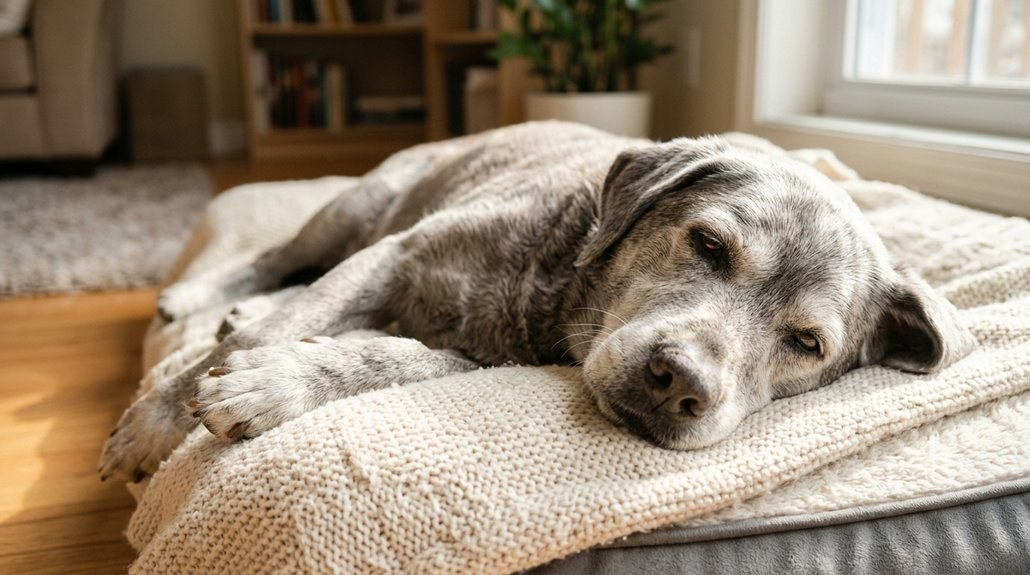
The vet matters more, not less, as a dog gets old, and the trip gets harder at exactly the same pace. A ninety-pound senior with sore hips cannot jump into an SUV, cannot be hoisted like a puppy, and should not have to scramble on a slippery floor while his owner, whose own knees are not new either, tries to catch his weight. So appointments slide. The dog who most needs twice-yearly care ends up going the least. The fix is not a stronger owner. It is a lower, slower, more patient ride.
Key Takeaways
- Senior dogs should see a veterinarian at least twice a year, because age-related problems progress quickly and are easier to treat early.
- The car is the barrier: no jumping, no scrambling, and no lifting that twists sore joints or risks the owner's back.
- A low vehicle floor, a ramp or supported lift, non-slip footing, and unhurried timing turn the trip back into a routine.
- Stiffness, slowing down, and reluctance to climb are pain signals to report to the vet, not just old age to accept.
Table of Contents
- [Why seniors need more vet trips, not fewer](#why-seniors-need-more-vet-trips-not-fewer)
- [The real barrier is the car door](#the-real-barrier-is-the-car-door)
- [What a gentle ride actually looks like](#what-a-gentle-ride-actually-looks-like)
- [Between trips: making home kinder to old joints](#between-trips-making-home-kinder-to-old-joints)
- [Frequently asked questions](#frequently-asked-questions)
Why seniors need more vet trips, not fewer
The 2023 AAHA Senior Care Guidelines define a senior dog as one in the last quarter of his estimated lifespan and recommend examinations at least twice a year, because kidney, heart, joint, and cognitive problems can move quickly at this age and respond better when caught early. The AVMA senior pets brochure makes the same point from the owner's side: regular checkups find problems before they become advanced, and an overweight or slowing senior should be evaluated rather than assumed to be "just getting old."
That twice-yearly rhythm only works if the trip itself is sustainable. An owner who dreads the load-in, the drive, and the load-out will stretch six months into a year without meaning to. Making the ride easy is not a luxury; it is the mechanism that keeps the care plan real. It helps to know in advance how much a pet taxi costs so the ride can be a standing plan instead of a fresh decision every time.
Slowing down is a symptom, not a personality change
The signs owners wave off are the ones vets most want to hear about. Cornell's osteoarthritis guidance lists stiffness, difficulty getting up from lying down, reluctance to walk or exercise, and difficulty with stairs or jumping among the signs of joint disease. The AAHA senior care guidelines add that owners often mistake subtle chronic pain for normal aging, and that pain and mobility treatment works best as a combination: medication, weight management, rehabilitation, and changes to the home environment. A dog who has started refusing the car may not be stubborn. He may be telling you the jump hurts.
The real barrier is the car door
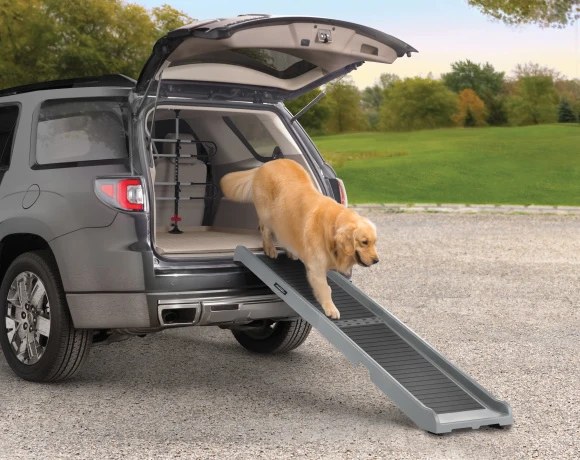
For a senior dog, the appointment is rarely the hard part. The hard parts are the jump up, the scramble on a slick seat or cargo floor, the twist to settle, and the drop back down at the other end, twice in one day. Each one loads arthritic hips, elbows, and spine at their weakest angles. Cornell specifically recommends ramps and non-slip rugs among the lifestyle changes for dogs with osteoarthritis, alongside weight control and low-impact activity. That advice applies to the vehicle as much as the house.
Height is the enemy, which is why vehicle choice matters more for seniors than for any other passenger. A low, flat load floor with a ramp or a supported two-point lift removes the jump entirely. This is the same physics that decides whether transporting a large dog goes well, doubled: the senior is both large and fragile, and often being lifted by an owner who should not be lifting at all.
What a gentle ride actually looks like
It starts before the engine does. The dog comes out of the house on a leash, at his pace, with time for a bathroom stop, because a rushed senior is a stressed senior. He walks up a ramp or is lifted with support under chest and hindquarters, onto a non-slip, padded surface where he can lie fully stretched or sit without bracing against turns. The drive is unhurried: gentle acceleration, early braking, no sharp lane changes. At the clinic he comes down the same way he went in, slowly, and waits in the vehicle rather than on a cold floor if the clinic is running behind.
That is a standard Pets Go Taxi ride, and senior dogs are some of my most regular passengers. The Suburban's low, flat cargo area, a ramp when a dog prefers to walk, and my hands on the lift instead of yours: local rides start at $100, and a standing twice-yearly pattern, or a weekly one for ongoing treatment, can be set up through the contact page. For the full picture of the service, see the large dog transport guide. If a senior takes a sudden turn, the same gentle setup covers emergency vet transport without a scramble.
Between trips: making home kinder to old joints
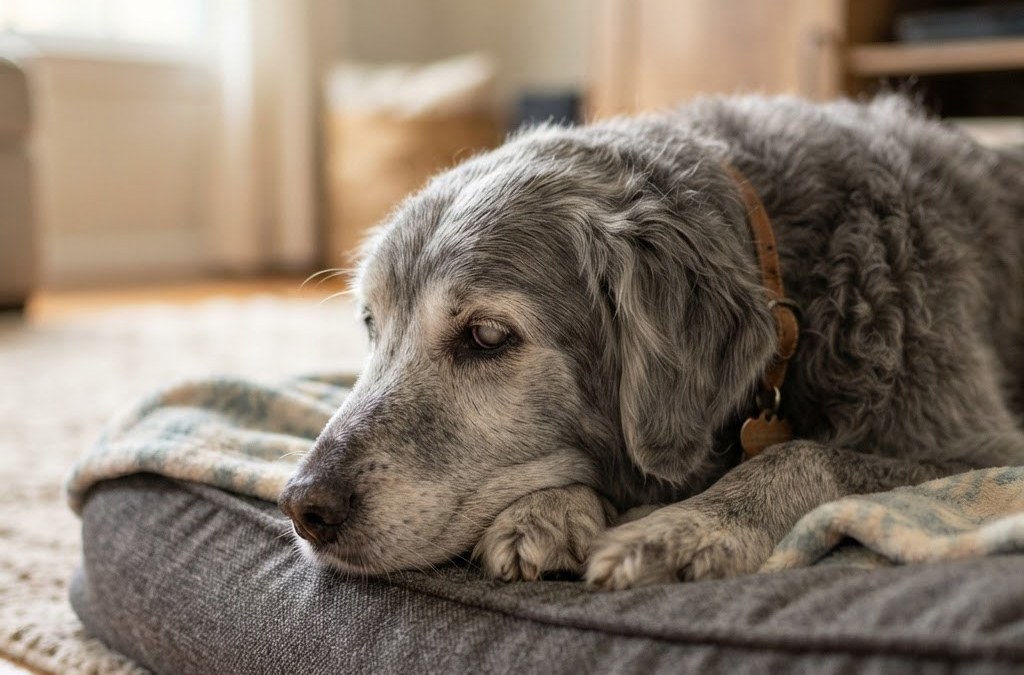
The ride is one day; the other days are yours. The AAHA home monitoring guidance walks owners through head-to-toe home checks, from mouth and teeth to mobility and nails, so changes get noticed between visits instead of at them. At home, the highest-value changes are simple: rugs or mats on slick floors, a ramp where the dog must climb, food and water where he does not have to travel far, and a bed that supports sore joints. The AVMA brochure suggests the same family of changes, including orthopedic beds, raised feeding platforms, and pet stairs or ramps.
Keep a short note of what you see: slower mornings, a new hesitation at the step, a change in appetite or sleep. The AAHA pain guidance notes that short videos of a dog moving at home are genuinely useful to the veterinary team for judging pain and whether treatment is working. Bring the notes and the video to the appointment. An owner who arrives with observations gets more out of the visit than one who arrives with a worry.
Our view: Old dogs do not complain, and their owners do not complain either; they just quietly stop booking the appointments that got too hard to do. I think that is a shame, because the twice-yearly visit is where years get added. My part is small and mechanical: a low floor, a ramp, a patient lift, and no hurry. It is enough to keep the appointments on the calendar, which is where they belong. — Brian Ka, Pets Go Taxi
Frequently asked questions
How often should a senior dog see the vet?
At least twice a year for a healthy senior, per AAHA guidance, and more often when a condition is being managed. If getting there is the obstacle, set the rides up as a standing arrangement.
My dog cannot jump at all anymore. Can he still ride?
Yes. With a ramp or a supported lift and a low, flat vehicle floor, no jump is required at either end. Tell me about his mobility when you book so the right setup is ready.
Is it worth treating arthritis, or is slowing down just age?
It is worth a vet's evaluation. Arthritis pain is treatable, and stiffness, reluctance to climb, and difficulty rising are recognized signs of it, not a verdict to accept without a check.
Can you do regular rides for ongoing treatment?
Yes. Recurring rides for rechecks, rehabilitation, or chronic care are a normal booking. We set the pattern once and I handle the driving each time.
Sources
- 2023 AAHA Senior Care Guidelines
- AAHA pain management guidance
- Cornell: osteoarthritis in dogs
- AVMA senior pets brochure
- AAHA senior pet home monitoring