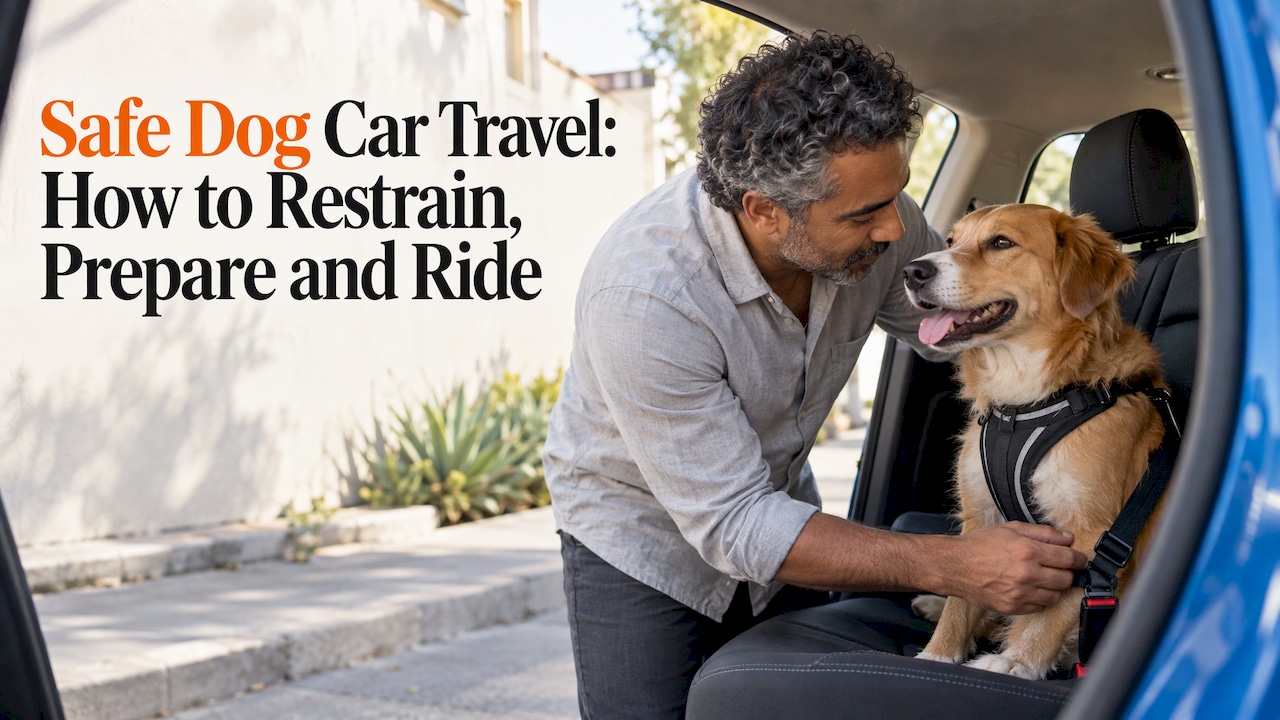

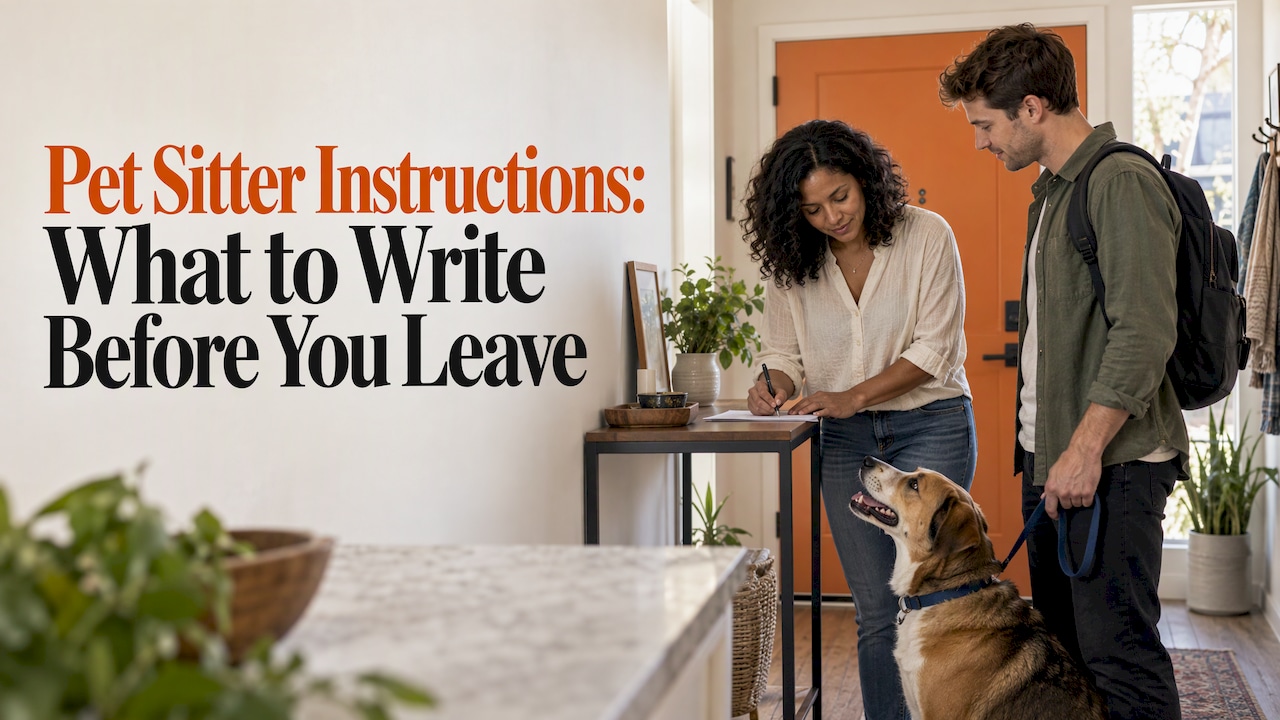
Good pet sitter instructions are one to two scannable pages that tell a stranger exactly what your pet eats, takes, fears and does, where everything is, and who to call if something goes wrong. Write them down, because a sitter cannot ask you a question at 9 p.m. when your phone is off. If your pet needs a ride to a vet or a late-night emergency while you are away, the same page should say how that ride happens, and that is where we come in.
TL;DR
- Cover five things: a pet profile, the daily routine, where supplies are, home access, and an emergency card.
- Use exact amounts, times and locations. “One scoop” means nothing unless the scoop is identified.
- Sign a written vet treatment authorization with a spending limit, and tell your vet who the sitter is.
- Agree on update frequency, format and channel before you leave. A photo and short note after each visit is the common standard.
- Put a transport plan in writing too: who drives your pet to the clinic, especially for a large dog or after hours.
Table of Contents
- Start with a pet profile
- Spell out the daily routine
- Where everything is, and how to get in
- The emergency card
- Plan how your pet gets to the clinic
- Set up updates before you leave
- Keep it scannable
- A worked example
- Promo: sitting and rides from one team
- Perspective
- FAQ
- Sources
Start with a pet profile
The American Animal Hospital Association (AAHA) recommends a detailed profile for each pet: name and nicknames, age, breed, personality, behavioral triggers, medical conditions, dietary restrictions, medications, microchip information, activity level and favorite hiding places. Add a current photo of each pet, so the sitter can recognize a shy cat who hides or confirm the right dog came to the door.
A few details owners tend to skip make the biggest difference:
- Fears and triggers, such as the vacuum, aluminum foil, strangers at the gate or thunder.
- Sensory limits like hearing loss or poor vision, which AKC Pet Insurance lists as special-needs notes.
- Command words your dog knows and what each one means.
- How multiple pets get along, and whether they eat separately.
Keep it current. A profile that was accurate six months ago may not be now, so recheck weights, medications and diets before each trip.
Spell out the daily routine
This is the part the sitter will reread most. Organize it by time of day, not as a narrative.
Feeding and water
Write the food brand, the amount per meal, the time and the bowl type. American Humane suggests counting out portions in labeled bags and flagging prescription diets, since they are not interchangeable. List allergies and forbidden foods, and say whether treats are allowed. For cats, note whether they graze or eat in one sitting. If you use a water fountain, add a standard-bowl backup.
Walks, play and bathroom habits
Give walk times, length, preferred route, leash or harness setup and how your dog reacts to other dogs or people. Say how often your dog needs to go out, whether the sitter should pick up yard waste, and any weather limits. For cats, name each litter box location, how often to scoop, where to dispose of waste and what changes in litter use to report.
Medications
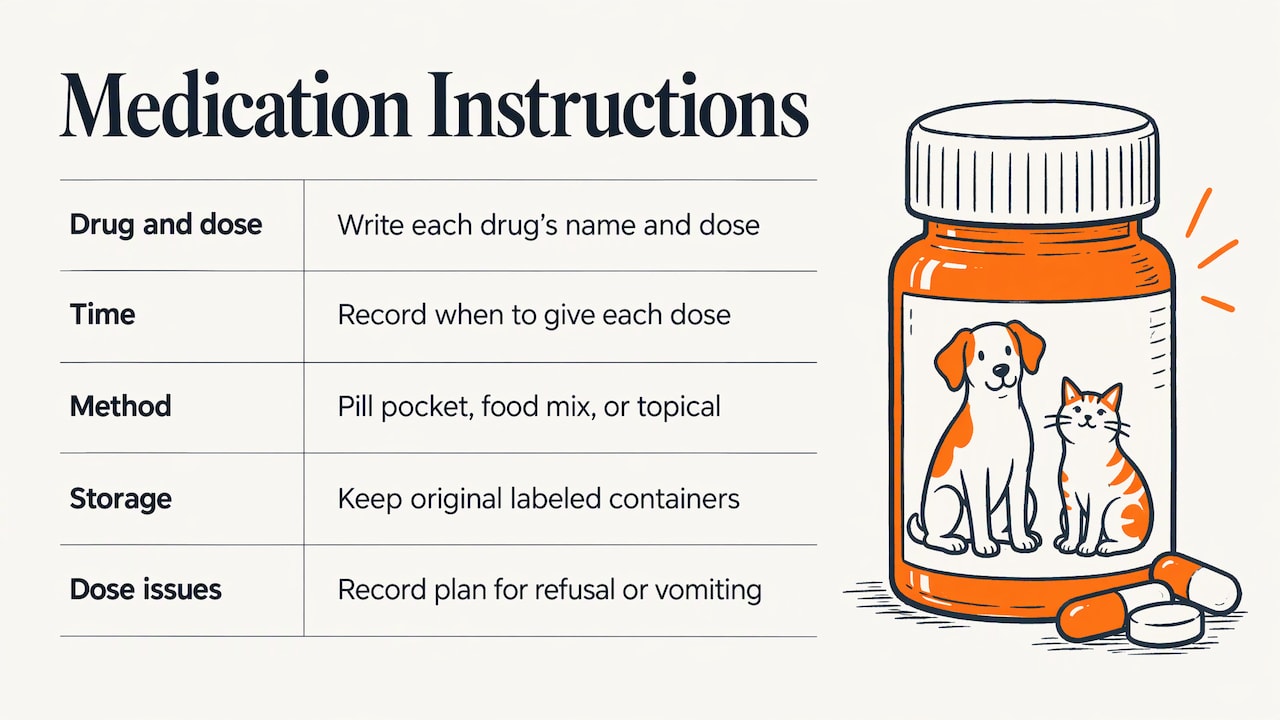
For each drug, write the name, dose, time, method (pill pocket, mixed into food, topical), storage and what to do if a dose is refused or vomited. Keep medications in their original labeled containers. Zoetis Petcare advises walking the sitter through the technique in person before you go. Our drop-in sitting visits include medication administration for $10 per visit as an add-on.
Normal versus call-me behavior
Tell the sitter what normal looks like (appetite, stool, energy) and which signs mean a phone call: not eating, repeated vomiting, straining in the litter box, limping, seizures. Specific thresholds beat “call if something seems off.”
Where everything is, and how to get in
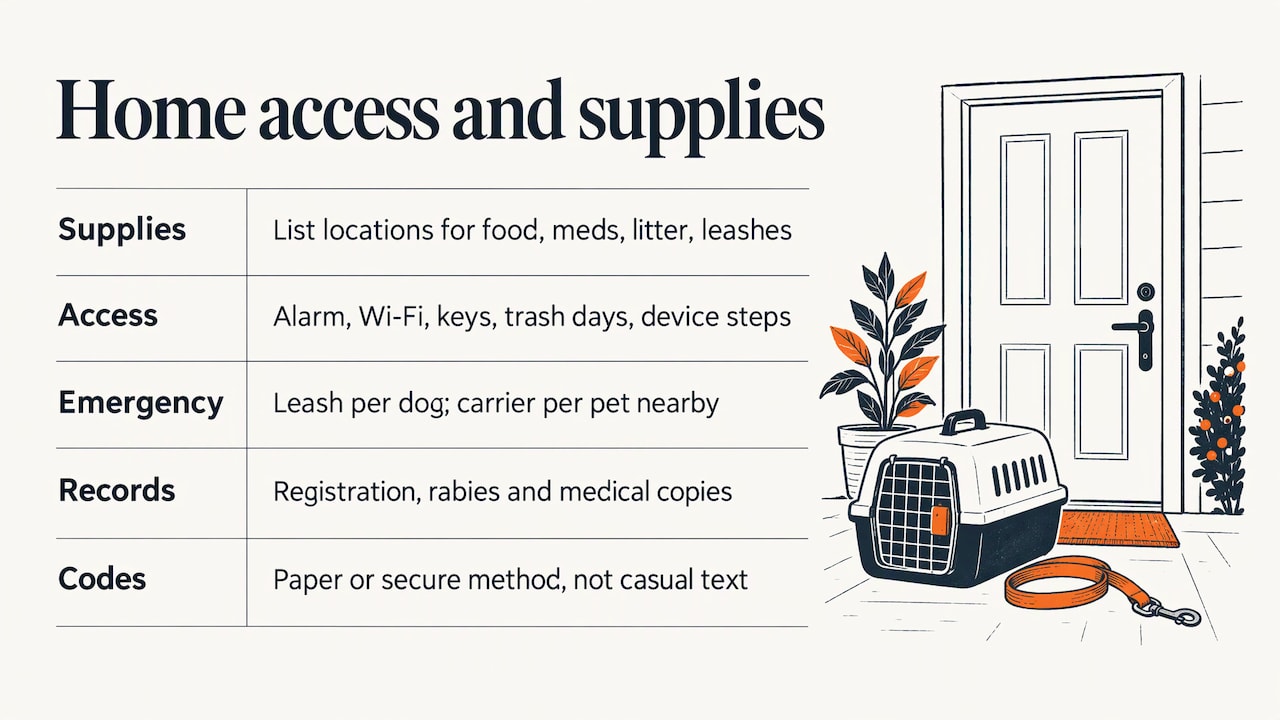
AAHA suggests listing the locations of food, treats, dishes, medications, litter and litter boxes, leashes, collars, toys, cleaning supplies and trash bins. Add access details: alarm code and arm/disarm steps, Wi-Fi password, key or lockbox location, trash pickup days and smart-home device instructions.
In California, the state’s Office of Emergency Services pet guide adds a useful habit: leave a leash for each dog by the front door and keep a carrier for each pet easy to reach. In wildfire and earthquake country, that saves minutes if a sitter must leave quickly. Also leave copies of registration, rabies vaccination and medical records.
Share access codes on paper or by a secure method, not in a casual text. ReachOutReady specifically advises against texting alarm codes or lockbox combinations.
The emergency card
Post one visible card, and send the same information by text or email. AAHA’s list covers:
- Your regular vet’s name, phone and address.
- The nearest 24-hour emergency clinic.
- ASPCA Poison Control, 1-888-426-4435 (a fee may apply).
- Pet insurance details and the microchip number.
- A nearby neighbor, friend or relative as a backup. Zoetis recommends at least three local contacts, plus how to reach you (cell, lodging phone and address, travel companions).
Authorize treatment in writing
Clinics often need owner permission before treating. Zoetis recommends a temporary medical treatment authorization form, left with the sitter and copied to your vet. The AKC notes that such forms commonly include a spending cap for care when you cannot be reached. Call your vet beforehand to define what decisions the sitter may make, so nobody faces an expensive choice with no guidance.
Plan how your pet gets to the clinic
Most instruction templates stop at “call the vet.” They skip the practical question: how does a pet get there? A sitter without a car, or with a 70-pound dog who won’t fit in a back seat, may be stuck. Write down the plan.
- Name who drives: the sitter, your backup contact, or a private pet transport.
- Note the pet’s size and handling needs. Vets advise handling an injured pet as little and as gently as possible, and a pet in pain may bite even its owner, according to WPVet.
- Leave the carrier, leash and records in one spot.
- For routine vet visits, note the clinic’s check-in process and whether your pet does better waiting in the car, as the SPCA’s Fear Free guide suggests for pets afraid of other animals.
If you also share a long drive with a sitter or house guest, send the route and vehicle-safety details in writing. A planning read like pet-friendly road trip routes and stops can help you think through breaks and stays.
In Los Angeles, our guide on what to do if your sitter needs emergency transport for your dog walks through this scenario.
Set up updates before you leave
Agree on the details in advance. MyPetsSafetyNet suggests deciding on frequency, format, one primary channel, timing and time zones. Daily updates are a reasonable baseline for a healthy adult pet, with more contact for puppies, seniors, pets on medication or a first-time sitter.
What a good update contains
- A photo or short video of the pet.
- A two-line note: food eaten, water refreshed, bathroom, mood.
- Medication confirmed in plain words, with the time.
- Anything unusual, with a photo.
Time To Pet’s guidance on post-visit updates lists the same elements. Sick, missing or injured pets should get a phone call, not only a text. A sample request: “Text me a photo and a two-line note after each visit. If anything looks off, call me. If I don’t pick up in 15 minutes, call Dana, then the vet.”
The Pet Professional Guild lists a reliable contact method, a set communication system and emergency notification protocols among the basics of professional pet care.
Keep it scannable
Barking Beau’s team advises organizing instructions so a sitter can find answers mid-visit: current facts, clear amounts, specific locations and what to do if something changes. Use headings, short lines and one page per pet if needed. American Humane’s Devan Costello-Mays notes that owners underestimate how much detail matters, so write it down rather than relying on verbal instructions.
A worked example
Here is a condensed entry for a two-pet household:
- Max, Lab mix, 72 lb, 8 years. 2 cups kibble at 7 a.m. and 6 p.m. Joint tablet in a pill pocket with breakfast. Afraid of the vacuum. Pulls on the leash, so use the front-clip harness. Walk the usual block loop, 20 minutes.
- Luna, cat, 11 lb. Half a can at 7 a.m. and 6 p.m. Scoop the hall litter box daily. Laser-pointer play before bed. Hides under the guest bed.
- Emergency: Dr. Lee’s clinic number, the 24-hour clinic address, signed authorization with a spending limit, and who drives Max, since he cannot fit in a compact car.
Promo: sitting and rides from one team
Our drop-in pet sitting visits are $50-75 per visit and cover feeding, dog walking, litter box cleaning, medication administration, condition checks, companionship and photo updates, for dogs, cats and exotic pets, including large breeds and special-needs animals. Additional pets start at $15, and weekend and holiday fees apply.

If your plan needs a ride, local pet rides start at $100, with a $25 large-breed fee for dogs over 50 lbs and a $40 after-hours or emergency fee. Every ride is private with the same driver, and owners get updates during transit. See our pet transport services or the landing page for a quote.
Perspective
Most instruction sheets fail at the last line. They tell the sitter to call the vet, but not how a 90-pound dog gets there at 11 p.m. We built our service around that gap: one experienced driver, private rides, no handoffs to strangers, and updates sent to the owner while the pet is in transit.
When a client leaves us a sheet, the best ones name the pet’s fears, the exact medication routine and a transport plan. Pets stay calmer in familiar surroundings, which is why in-home visits suit so many of them, and why a ride, when needed, should be with someone who knows large, anxious and special-needs animals.
Write the page once, keep it current, and put our number on the emergency card next to your vet.
Brian
FAQ
How long should pet sitter instructions be?
One to two pages per household is usually enough if it is organized by routine, with exact amounts and locations. A sitter needs to find an answer in seconds during a visit. Put emergency information on its own card.
Should I give a pet sitter permission to authorize vet care?
Yes, in writing. Clinics often need owner authorization, and a signed form with a spending limit lets a sitter act without delay. Call your vet in advance to confirm what they will accept.
How often should a sitter send photos?
A photo and short note after each visit is the common expectation, and once a day is a reasonable baseline for a healthy adult pet. Ask for more for puppies, seniors or pets on medication.
What should I tell a sitter about a cat versus a dog?
For dogs, cover feeding amounts, walk routes, leash habits and reactivity. For cats, cover litter box locations and scooping, grazing habits, hiding spots and favorite toys. Both need medication details and a list of warning signs.
Sources
- AAHA: Essential Pet Sitter Instructions
- AKC Pet Insurance: Instructions Template
- American Humane: Pet Sitter & Boarding 101
- Zoetis Petcare: Preparing for a Pet Sitter
- California Office of Emergency Services: Pet Emergency Guide
- AKC: Prepare Your Home for a Pet Sitter
- ReachOutReady: Text Messaging for Pet Sitters
- WPVet: Transporting Your Pet in an Emergency
- SPCA Fear Free Vet Visit Guide
- MyPetsSafetyNet: Pet Sitter Communication Plan
- Time To Pet: Post-Visit Updates
- Pet Professional Guild: Pet Care Service Non-Negotiables
- Barking Beau’s: What Information to Leave
- Pet-Friendly Road Trips