
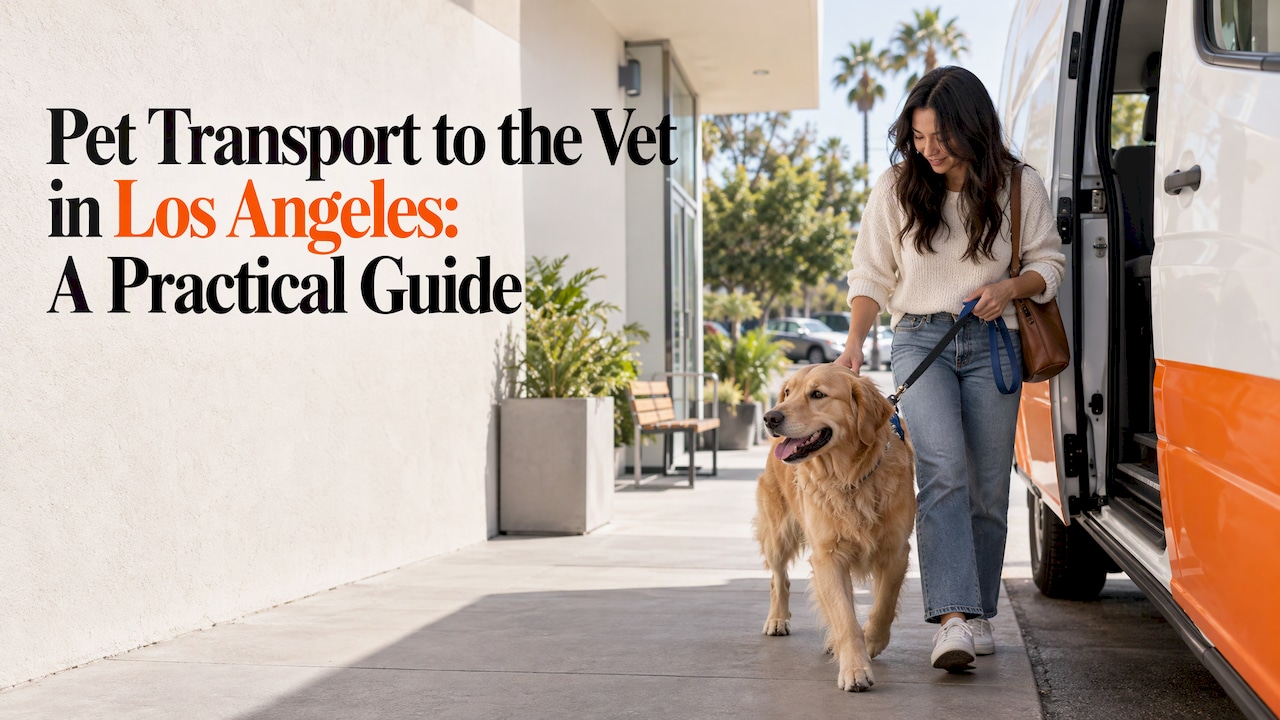
The easiest way to get a pet to a Los Angeles vet is a private ride with one driver who stays with your pet the whole way, so you are not fighting the 405 with an anxious cat or a 90-pound dog in the back seat. Our local pet rides start at $100, and we take large breeds, after-hours trips and emergencies. Below is how to prepare, what to secure, when to call the hospital first, and what a ride costs.
TL;DR
- Every pet travels restrained: cats in a carrier on the floor or seat-belted, dogs in a crate or crash-tested harness.
- For an emergency, call the 24-hour hospital first so staff can prepare and tell you whether your pet is safe to move.
- Our local rides start at $100, with a $25 large-breed fee (50+ lbs) and a $40 after-hours or emergency fee.
- Bring records, medications and ID, and plan for rush-hour traffic when booking.
- Airport trips have their own rules: LAX keeps pets outside terminals unless they are service animals or ready to travel.
Table of Contents
- Why the ride matters as much as the appointment
- Your options for getting to the vet
- How to secure your pet in the car
- What to bring
- Large breeds and pets with special needs
- After-hours and emergency trips
- What a ride to the vet costs
- Airport trips with a pet
- Our perspective
- Book a calm ride to the vet
- FAQ
- Sources
Why the ride matters as much as the appointment
A stressed pet is harder to examine, and the trip is often the stressful part. The Feline Veterinary Medical Association’s 2025 position statement frames the vet visit as starting at home, and says proper carriers, acclimation and in-vehicle securing reduce feline distress. It also notes that poor transport experiences are a major reason caregivers skip veterinary care.
In Los Angeles County, the ride adds its own problems: long drives between neighborhoods and specialty hospitals, parking at busy clinics, and congestion at both ends of the workday. If you drive alone with a pet that needs your hands, or you have no car, a private pet ride solves all of it at once.
Your options for getting to the vet
Most owners choose between three routes:
- Our private pet taxi. One driver, one pet family, no shared rides and no handoffs to strangers. We send updates during the trip, and we accept large breeds that other services turn away. See our services.
- Driving yourself. Works for a calm, small pet when you have a second person for a tricky one. It needs the right restraint, covered below.
- A mobile vet. Comes to your home, typically with a travel fee. One Southern California mobile practice, for example, publishes travel fees of $99 to $249 by zone and says it is not an emergency service. It cannot handle every procedure, so many visits still need a clinic, and that is where a ride comes in.
If your pet needs a clinic, surgery, imaging or a specialist, a private ride gets you there without you managing a nervous animal while navigating.
How to secure your pet in the car
Los Angeles County Public Health’s emergency guide for pet owners advises keeping dogs leashed, cats in carriers with identification, never leaving a pet unattended in a car, and using a crate secured with a seat belt.
Dogs
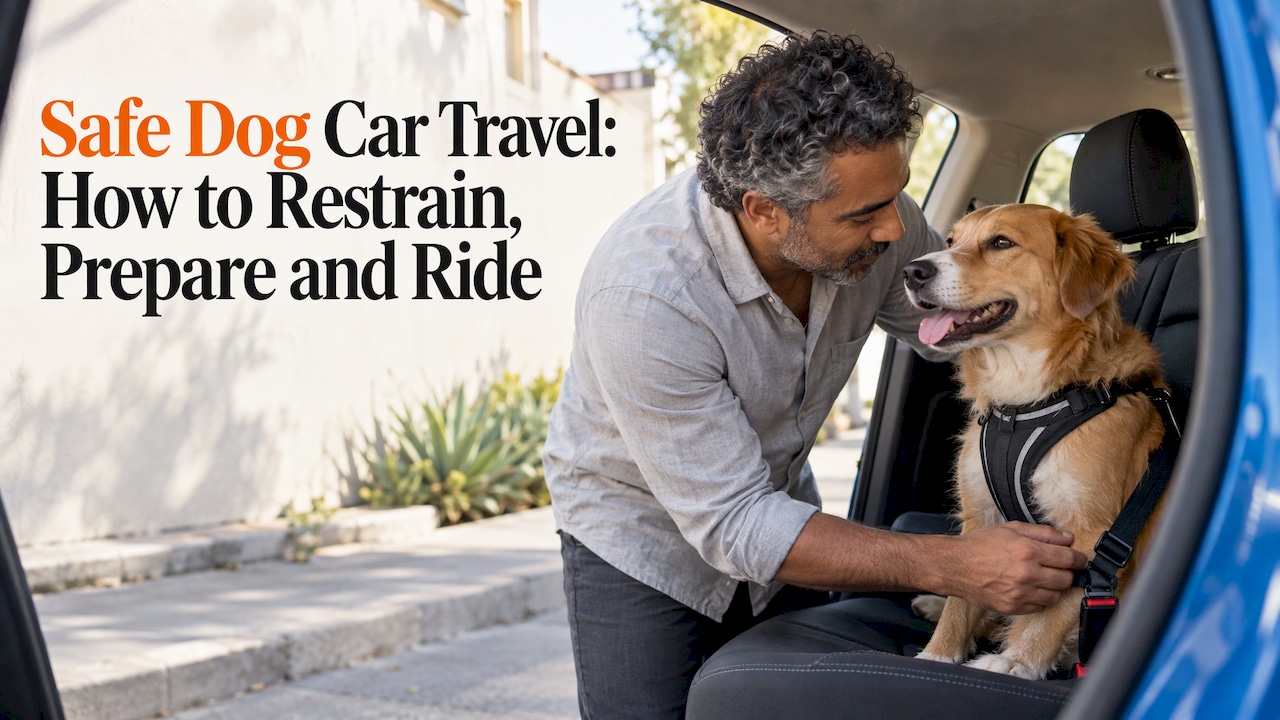
A loose dog is a danger to everyone in the car. One veterinarian calculates that a 60-pound dog in a 35 mph crash hits with roughly 2,700 pounds of force. He recommends a crash-tested harness or a strap-anchored crate. A veterinary hospital’s transport guide adds that a crate should let the dog stand and turn around without sliding, be ventilated and sturdy, and be fastened down.
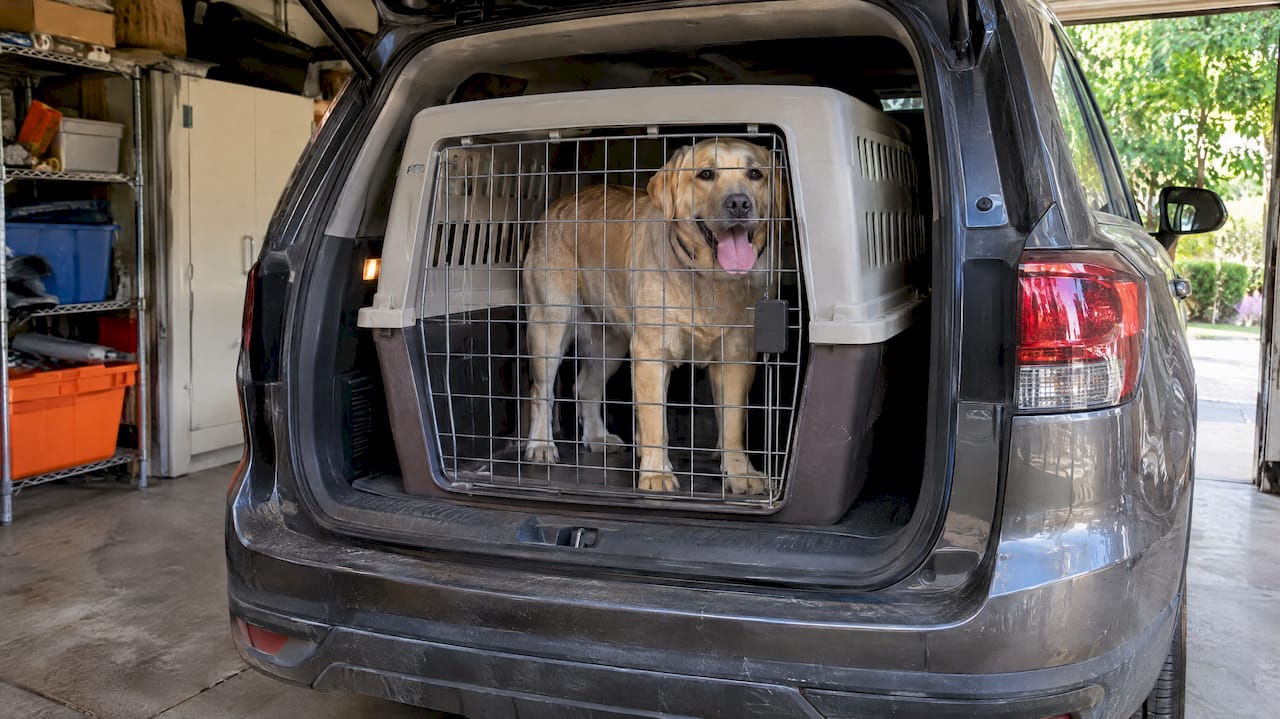
Worked example: a Labrador that measures 40 inches nose to tail needs a crate about 46 inches long, since the common sizing rule is nose-to-tail plus six inches. That crate will not fit in many sedans, which is a common reason large-breed owners struggle to get to appointments.
Cats
The FelineVMA recommends a suitable carrier, letting the cat hide under a towel, and securing the carrier on the vehicle floor. Its caregiver guide says to support the carrier with two hands underneath, keep it level, drive smoothly and use one carrier per cat. VCA Animal Hospitals suggests booking quiet clinic times, waiting in the car rather than the lobby and choosing a carrier with a removable top so the exam can happen inside it.
For cats that panic, see our guide to cat travel anxiety or our page on pet transport for cats in Los Angeles.
What to bring
- Previous records, vaccination history and a list of current medications
- A leash and collar with ID, even for cats in carriers
- Any packaging if your pet may have eaten something
- Insurance details, if you have them
- A towel or blanket that smells like home
The emergency hospital LAASER lists records, bloodwork, allergy information and insurance details as useful to bring, and also says not to delay emergency care to gather them.
Large breeds and pets with special needs
Many transport options turn away big dogs or dogs that cannot manage stairs and car jumps. We do not. Our rides are handled by one experienced driver who specializes in large breeds, anxious pets and special-needs animals. A large-breed fee of $25 applies for dogs 50 pounds and up.
Tell us the weight, any mobility limits and whether your dog is nervous with strangers when you book, so the ride is planned around your pet. For a trip to a clinic in Glendale, see our pet taxi in Glendale page.
After-hours and emergency trips
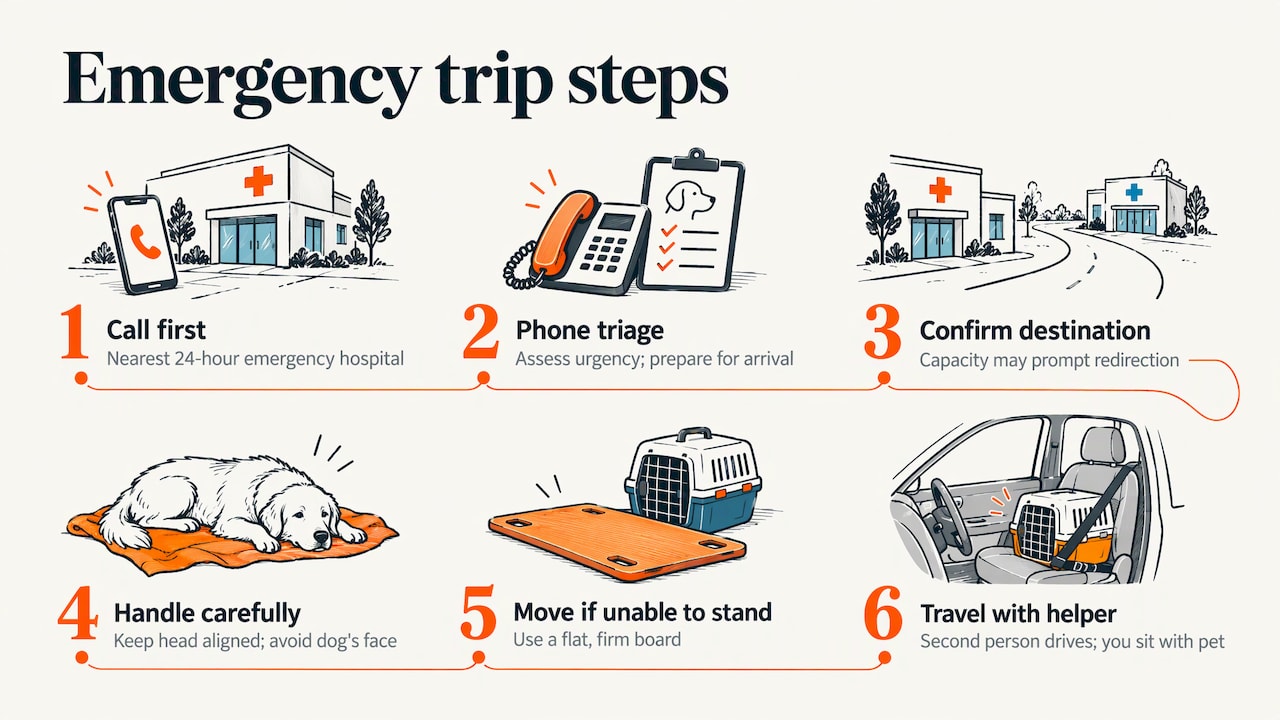
If your pet is in crisis, call the nearest 24-hour emergency hospital first, before anything else. Staff can triage by phone, tell you how urgent it is and prepare for your arrival. The AKC also recommends calling ahead so the hospital can prepare, and notes that capacity can vary, so the hospital may redirect you elsewhere. Los Angeles options include LAASER, open 24/7/365 with no referral needed, and, per one Los Angeles clinic’s list, ACCESS in Culver City and MASH on Santa Monica Boulevard.
Safety points for the trip itself, from a veterinary emergency director quoted by Rover: avoid putting your face close to a dog in pain, since it may bite; keep the head aligned with the body; and have a second person drive while you sit with the pet. A pet that cannot stand may need a flat, firm surface to be moved, such as a board, per NorthStar VETS’ emergency handbook.
If you have no second person or no car, that is when we step in. We offer after-hours availability and emergency pet transport, with a $40 after-hours or emergency fee on top of the ride. Read our guide on what to do at 2 a.m. and our page on getting a pet to the ER fast.
What a ride to the vet costs
These are our published prices, as read from our site in November 2026:
| Item | Price |
|---|---|
| Local pet ride | from $100 |
| Additional miles beyond 10 | $3.50 per mile |
| Rush hour (AM/PM) | $25 |
| Large breed (50+ lbs) | $25 |
| After hours / emergency | $40 |
| Driver wait time | $65 per hour |
A worked example: a 60-pound dog going to a clinic within the first 10 miles during the morning rush would be the $100 base ride plus $25 large breed and $25 rush hour, or $150 before any wait time. Final quotes depend on distance, pet size and timing. More detail is in our guide to how much a pet taxi costs in Los Angeles.
For reference, one guide lists Los Angeles local pet ambulance trips at $300 to $600, a different service from a private ride to an appointment.
Airport trips with a pet
If your pet is flying in or out of LAX, plan the ground leg carefully. LAX’s rules and regulations allow only leashed licensed service animals, or animals ready for shipment or travel, inside terminals; all other animals must stay outside, leashed or restrained. The airport’s 2026 service standards describe pet relief areas with turf, water stations and waste bags.
We handle airport transfers too. See getting your dog to LAX.
Our perspective
Most vet-ride problems we hear about come down to the same thing: the owner is trying to be the driver, the handler and the calm one all at once. That does not work with a large dog that needs lifting, or a cat that is already panicking before the car starts.
Our approach is simple. One experienced driver, a private ride, no strangers and no shared vehicles, and updates sent to you during the trip. We take large breeds and anxious or special-needs pets, and we are available after hours when something cannot wait.
If your pet needs the vet, your job is to be with them at the appointment. Ours is to get them there calmly.
Brian
Book a calm ride to the vet
We offer private local pet rides from $100, plus airport transfers and emergency transport, across Los Angeles and Southern California. Tell us your pet’s size, the clinic and the time, and we will quote the ride.
Request a ride with Pets Go Taxi or see everything we do on our services page.
FAQ
How do I transport a cat to the vet?
Use a sturdy carrier that your cat has had time to get used to, with a towel over it. Place it on the vehicle floor, or seat-belt it if the carrier is crash-tested, and drive smoothly. Hold it level with two hands underneath when you carry it.
Can I take a large dog in a pet taxi?
Yes, with us. We accept large breeds that other services often turn down. A $25 large-breed fee applies at 50 pounds and over, and you can tell us your dog’s size and any mobility needs when you book.
Who do I call first in a pet emergency?
Call a 24-hour emergency veterinary hospital before you move your pet. Staff can advise how urgent it is and prepare for your arrival. If you need a driver afterward, we offer after-hours and emergency transport.
Can I bring my dog inside LAX?
Only leashed licensed service animals, or animals ready for shipment or travel, are allowed inside the terminals. Other animals must stay outside, leashed or restrained. We can handle the ride to or from the airport.
Sources
- FelineVMA 2025 transportation of cats in motor vehicles
- A Cat Carrier Guide for Caregivers
- Reducing the Stress of Veterinary Visits for Cats
- Emergency Preparedness & Pets guide, LA County Public Health
- Summer Travel with Pets: Car Safety
- Transporting Your Dog to the Vet
- How To Keep Your Dog Safe in the Car
- NorthStar VETS Emergency Pet Handbook
- LAASER FAQ
- Emergency Vet in Los Angeles, Rancho Park Veterinary
- AKC: How to Transport a Dog to the Hospital
- Saving Grace Veterinary Services FAQ
- Emergency Pet Transport guide
- LAX Rules and Regulations
- LAX Service Standards